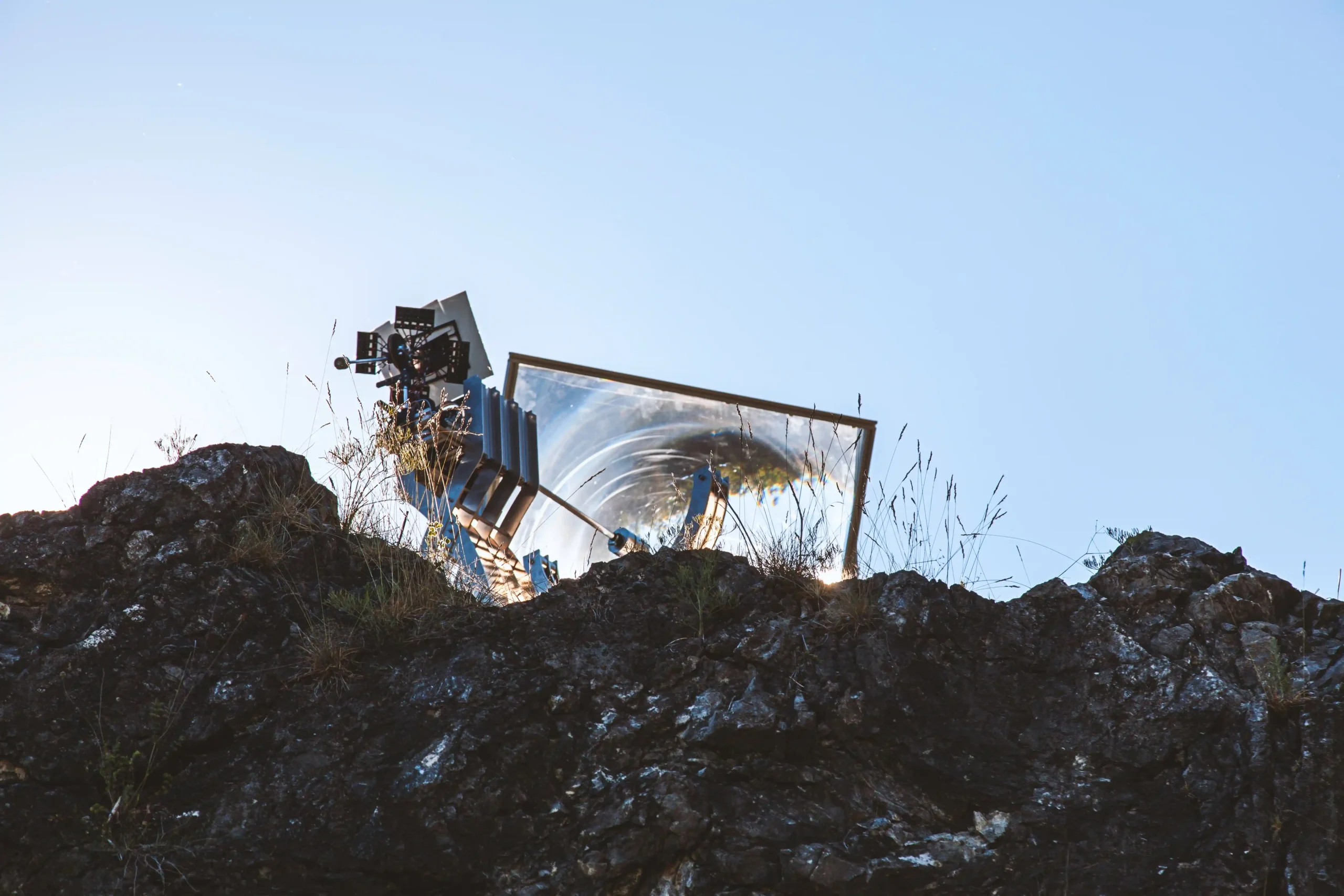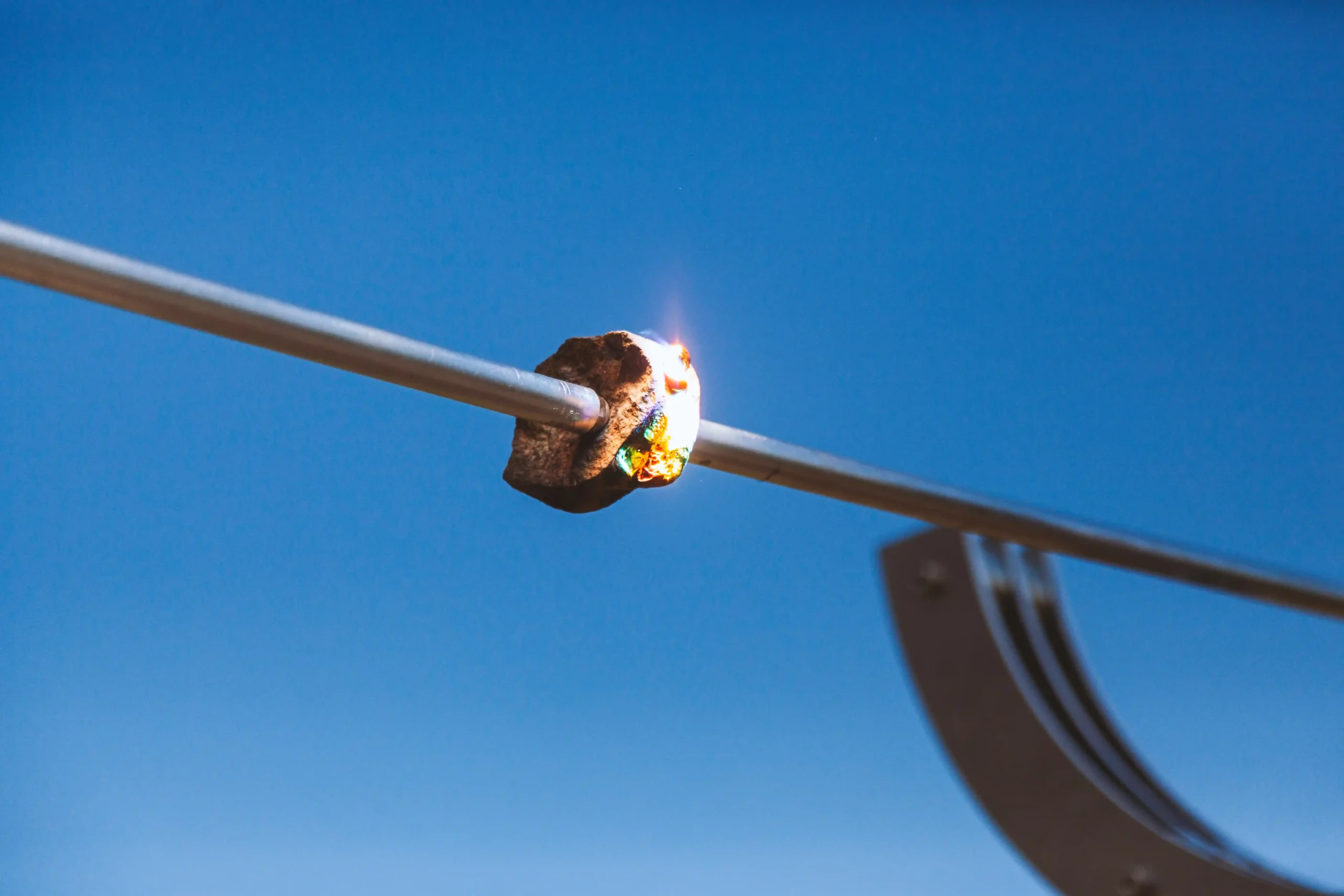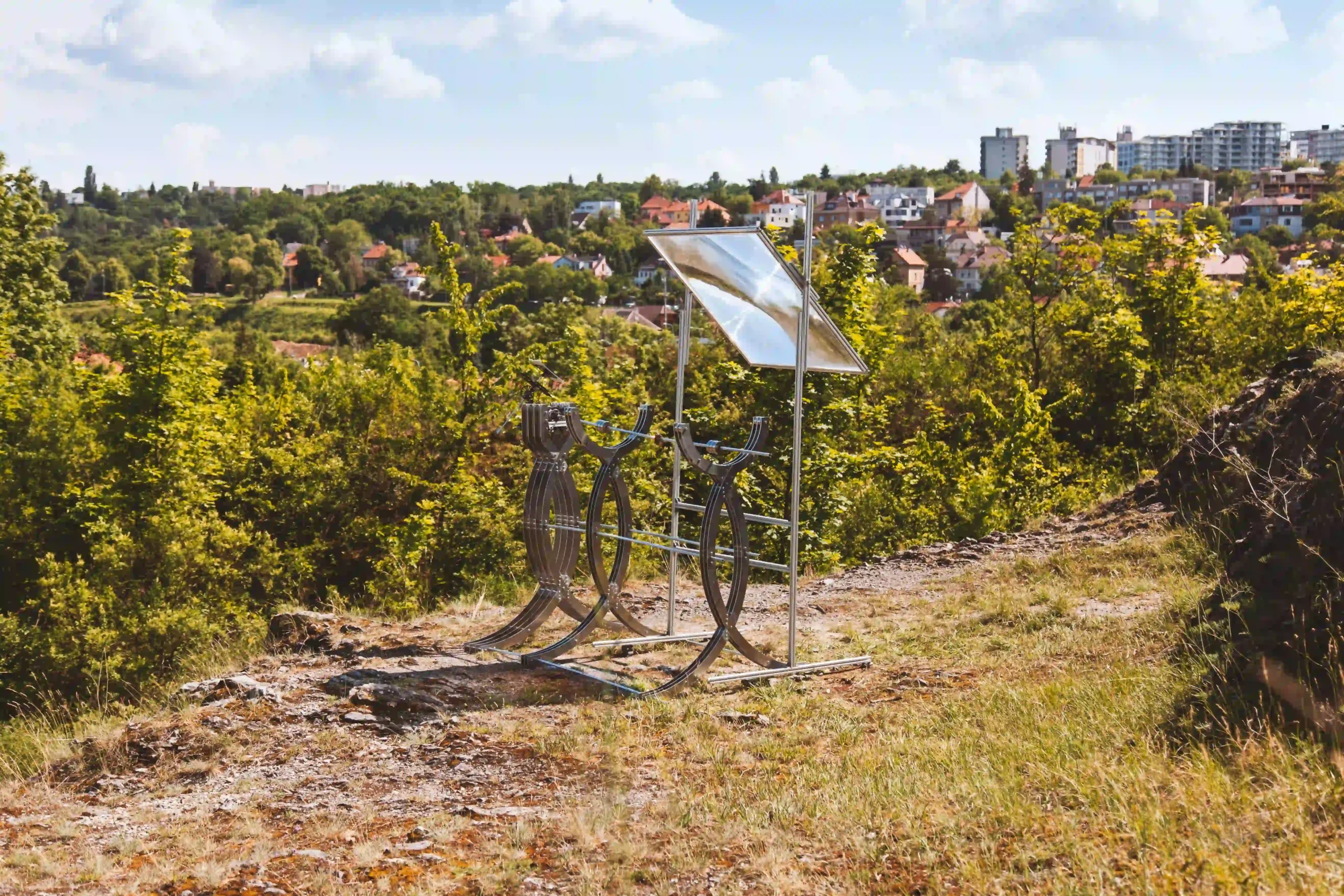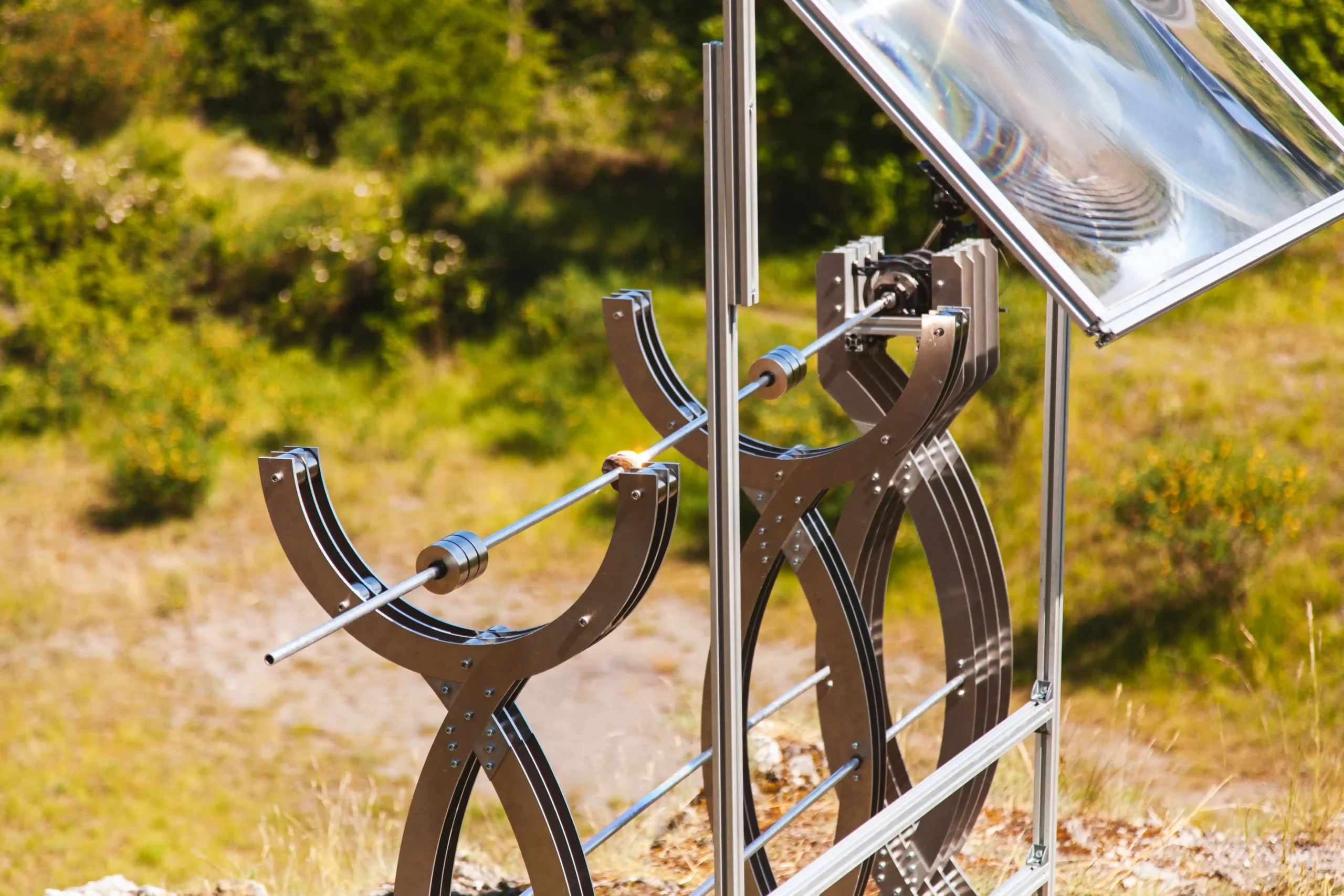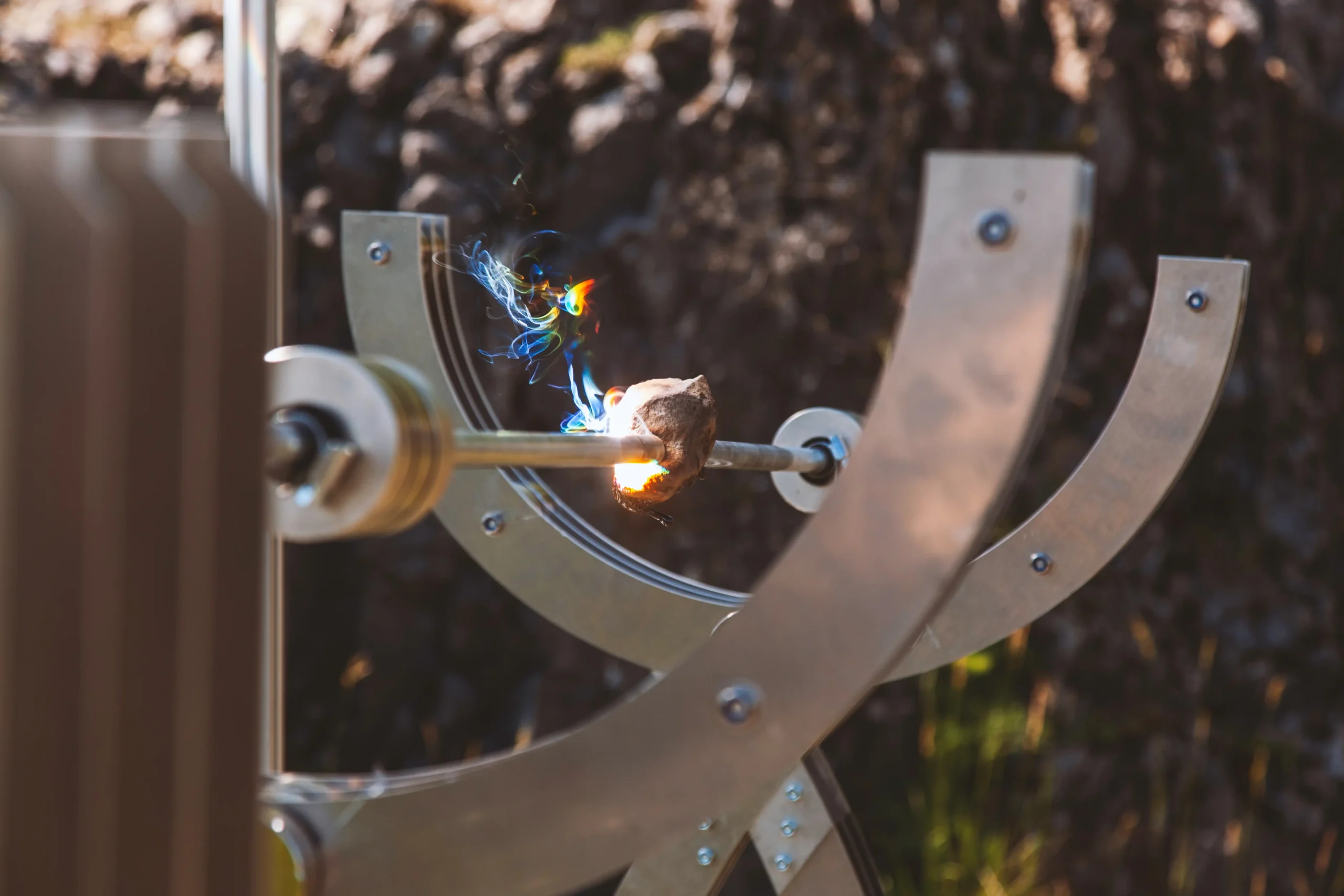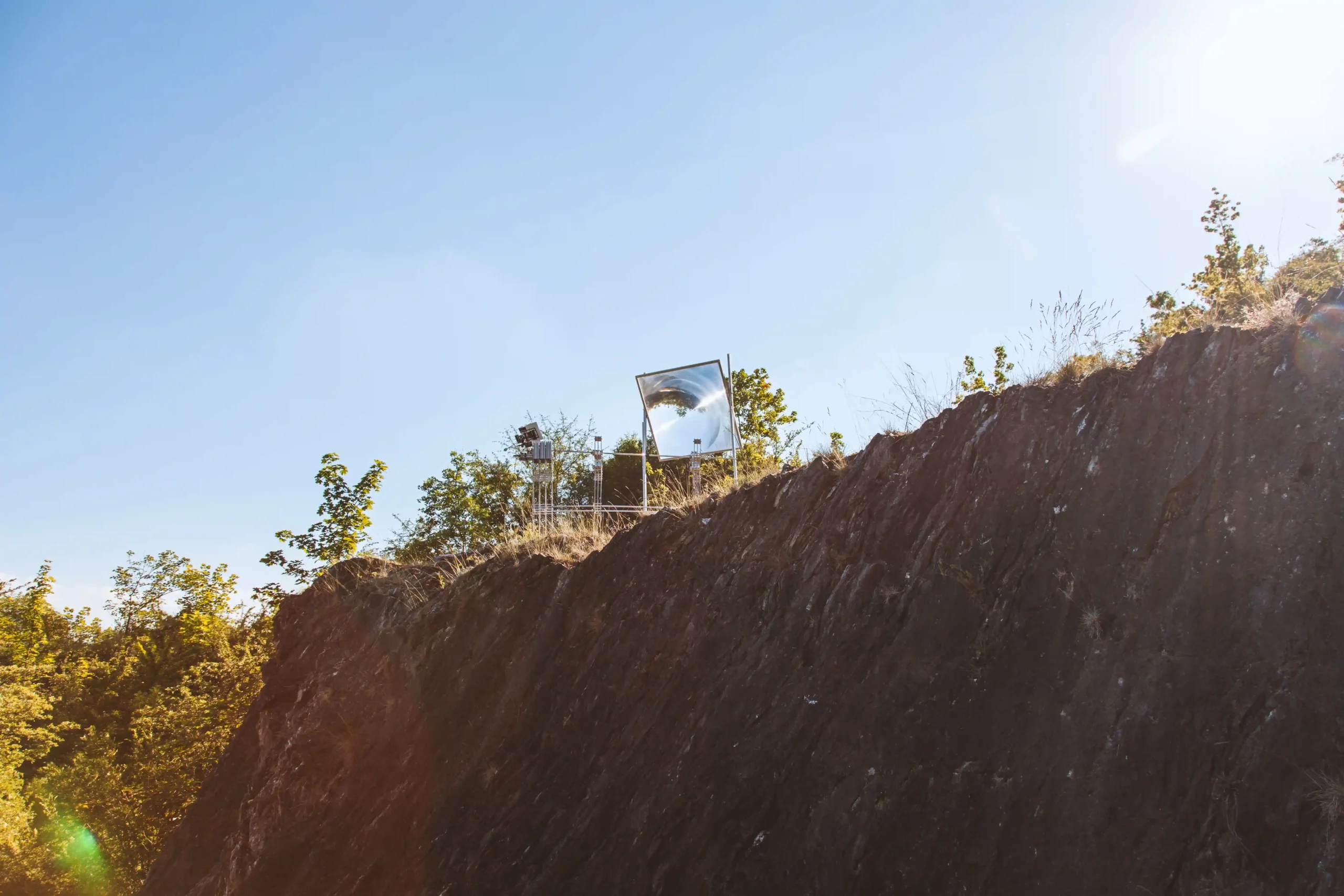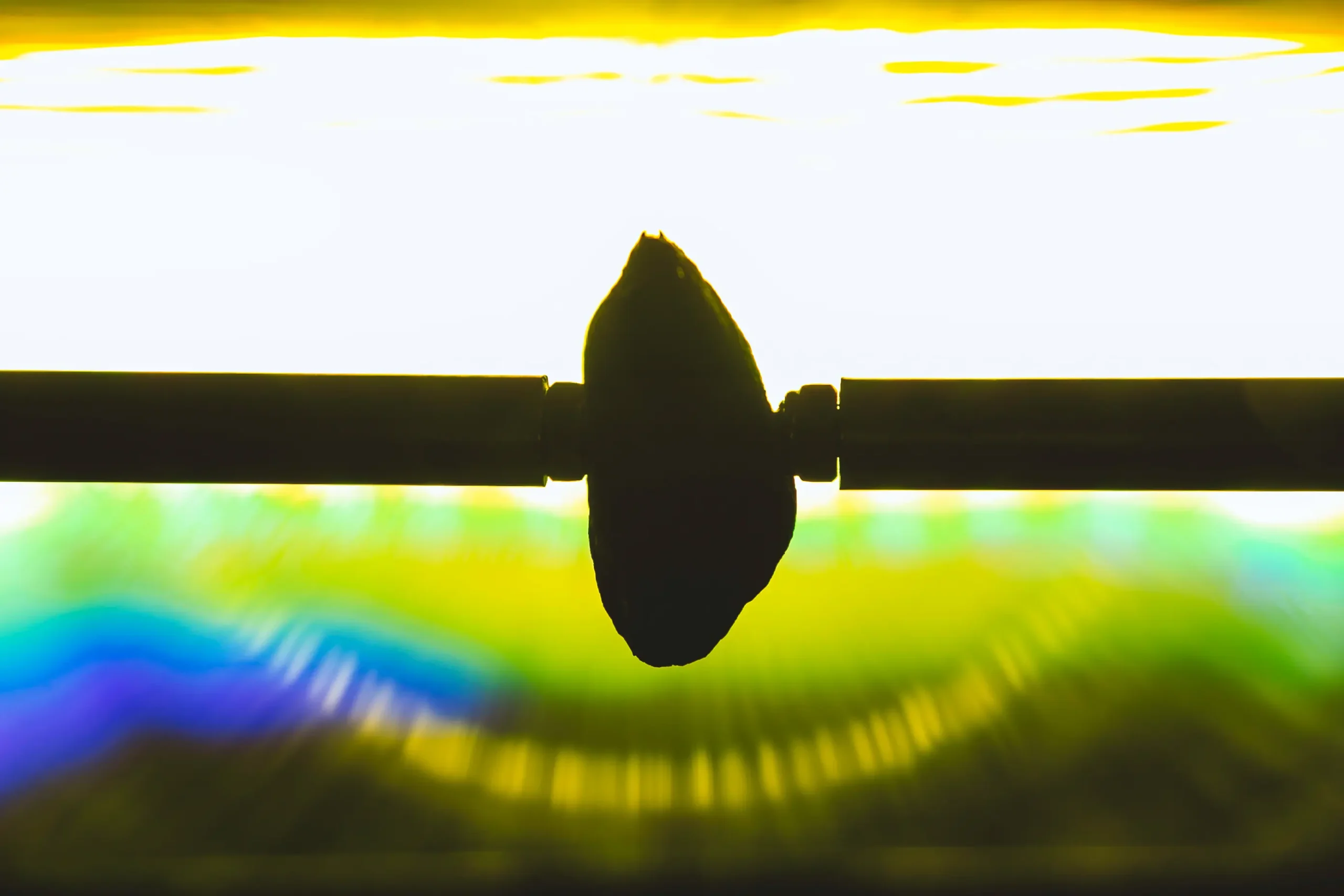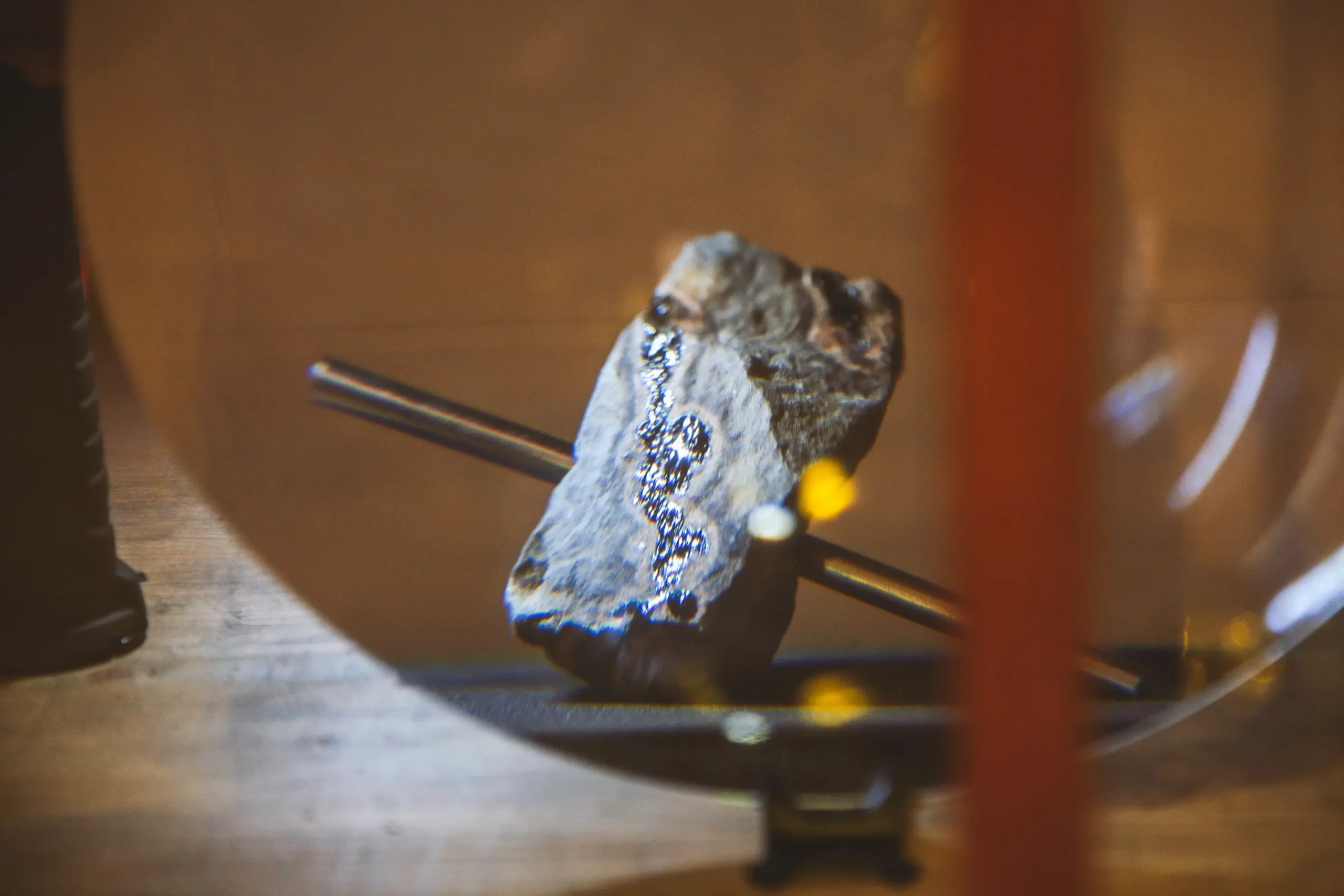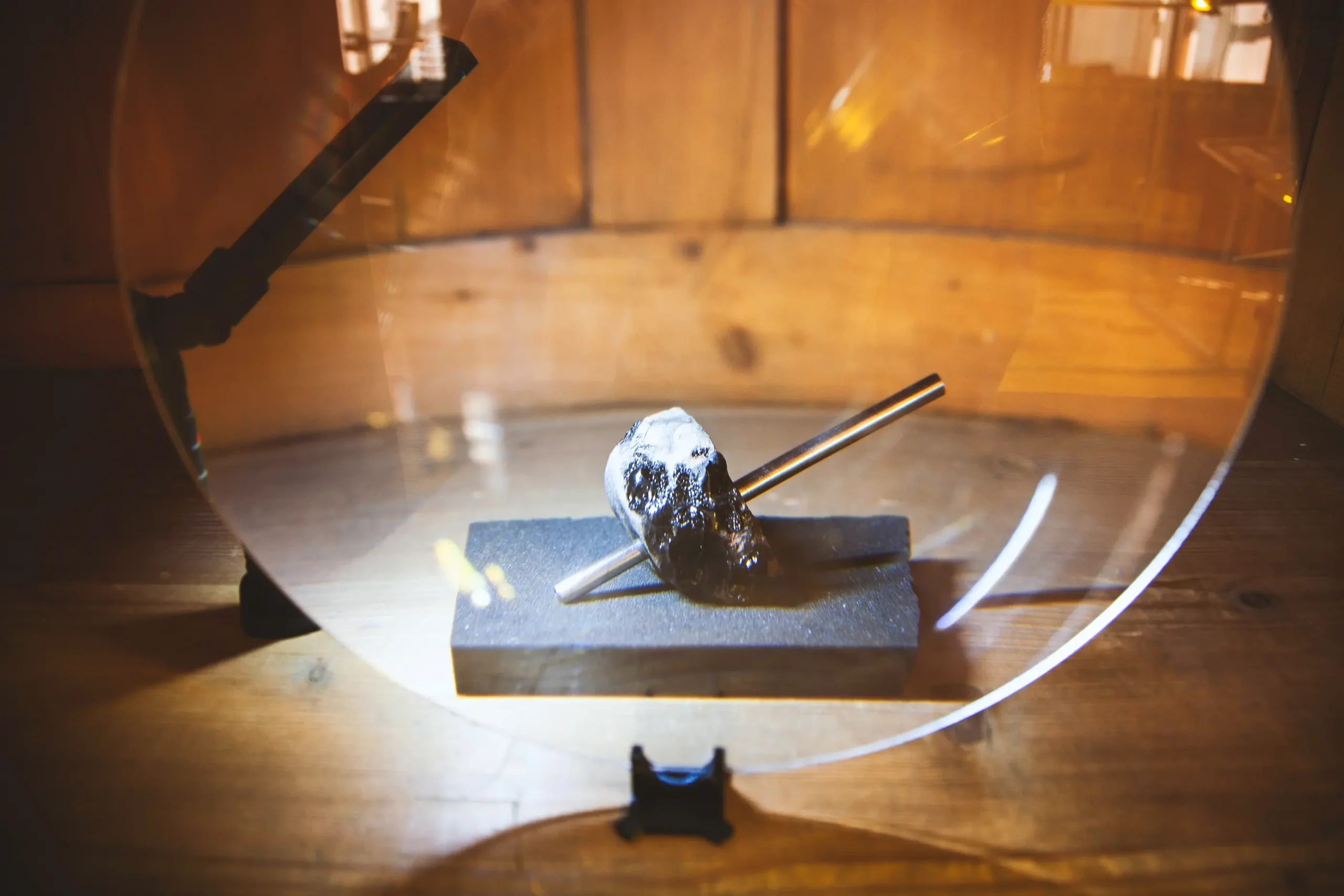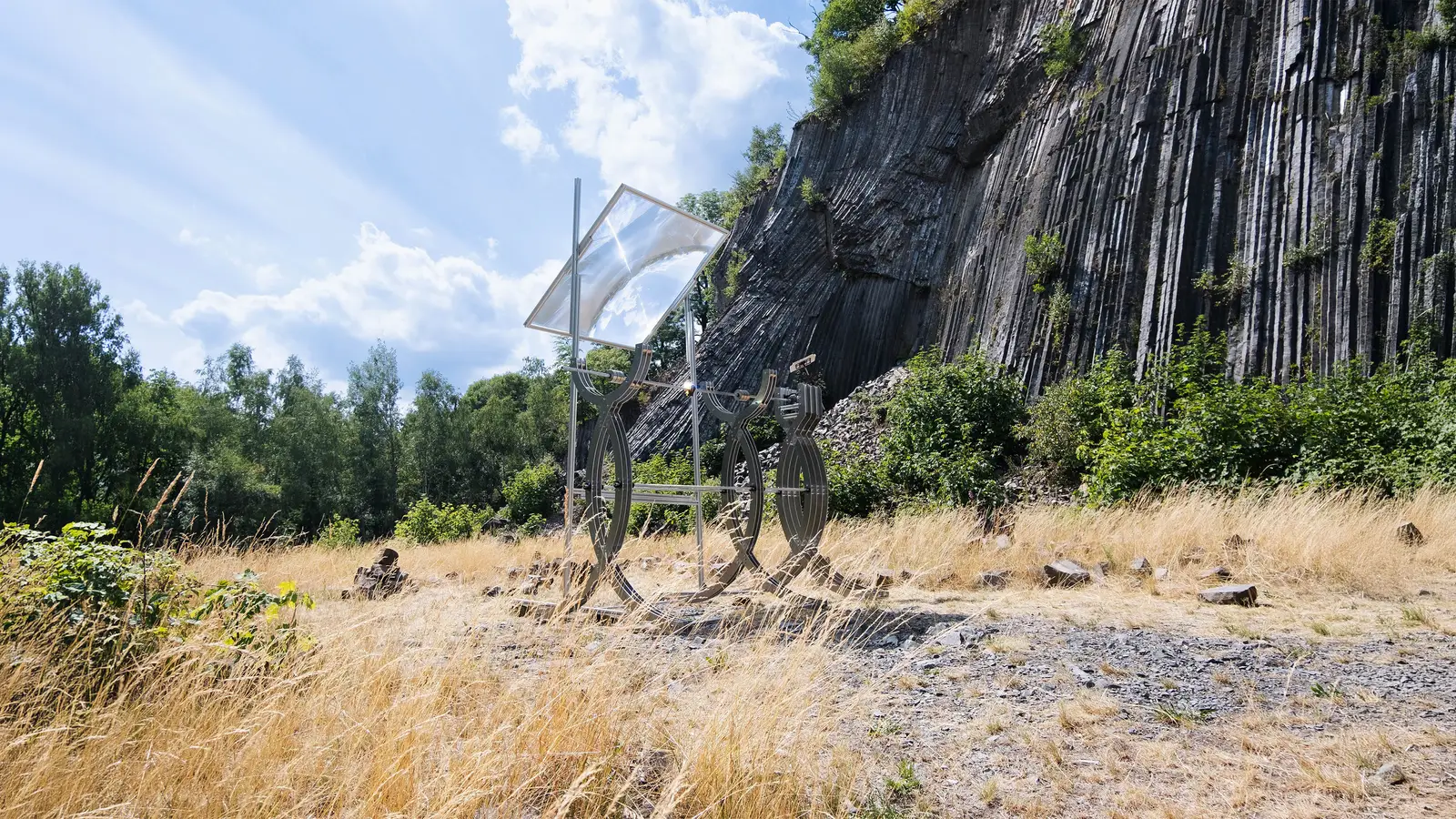
Three-channel generative video installation. 3× modified LCD display, 4× free-standing panel of tempered glass with polarizing film.. 3× custom-made LCD panel, aluminum frames. Result is a continuous projection of water micro-world.
| Series | Hydro-Syntax |
| ID | 2021-HS-TR-01 |
| Date of origin | 9.12.2025 |
| Technique | Three-channel generative video installation. 3× modified LCD display, 4× free-standing panel of tempered glass with polarizing film. |
| Dimensions | Display 1./2.: 2020 × 650 × 1220 mm; Display 3.: 2160 × 810 × 1580 mm |
| Duration | Continuous, generative |
| Software | AeroSynth Engine v1.0 (custom patch in TouchDesigner). Patch processes time series of air quality data and maps pollutants (NOx, PM2.5, metals) to generative system parameters (particle speed, color, noise density). |
| Hardware | 3× custom-made LCD panel, aluminum frames. |
| Data source | Long-term air quality monitoring in Brno (Research of Dr. Vilém Pařil, ESF MUNI, since 2021). Data: PM10, PM2.5, nitrogen oxides, ozone, metals, aromatic hydrocarbons. |
| Interaction | Performative, cognitive. Image is latent — viewer must actively use external polarizing filter (glass panel) as „lens“ to visualize data. |
| Location of origin | Dům umění města Brna (výstava „Aeris Chronos“) |
| Type of exhibition | Gallery installation |
| Curator | Jennifer Helia DeFelice, Monika Murgu (Szűcsová) |
| Photo | Jan Prokopius |
| Author of text | Kryštof Brůha |
| Key concepts | Data pneumatology, perceptual apparatus, latent image, cognitive filter, urban breath, Anthropocene techno-fossils |
| Text title | Magna Mutatio — Aeris Chronos: The Topography of the Invisible Breath |
| Date | Exhibition |
| 16.3.2021 | Aeris Chronos (solo) – Dům umění města Brna, Brno, Czech Republic |
| Series | Related works |
| Mutatio Superstratum | Mutatio Superstratum mark II (2025) — sibling exhibition — Dům umění Brna |
| Magna Mutatio | Magna Mutatio — Aurei Montis (2023) — predecessor — polarizing filters as cognitive tool |
| Magna Mutatio | Aqua Viridis (2025) — sibling — polarizing filters + satellite data |
CONCEPT
The atmosphere as a dynamic system—not an empty space, but a collision zone of chemical reactions, anthropogenic emissions, and meteorological processes. PM2.5, NOx, ozone, heavy metals, PAHs—parameters measured by ESF MUNI monitoring stations since 2021—constitute a time series that does not capture a static state, but fluctuation. Aeris Chronos works with this dataset as a living material: the AeroSynth Engine v1.0 maps pollutant concentrations onto generative parameters (particle velocity, color, noise density), rendering the data as a substance rather than a reference. The installation does not visualize pollution as a phenomenon to be observed, but reconstructs atmospheric metabolism as a process transcending the human scale of perception.
At the core of the installation is the principle of the latent image. The visualization remains optically hidden until the viewer utilizes a polarizing filter as a cognitive tool—thereby transforming them from a passive observer into an active reader of data. The perceptual apparatus (the glass panel) is not a technical artifact, but an epistemological gesture: it reveals that the air we breathe is being rewritten by industrial traces. Technology does not reveal reality in its entirety, but produces new kinds of invisibility.
This translation of these data into sensorially graspable forms raises questions regarding environmental transformations, the relationship between human and technology, and the existence of invisible layers of reality. The installation does not work with an illustration of a problem, but with its material and temporal unfolding in space.
Air here is not a neutral background or a mere physical medium, but a carrier of the traces of history, environmental changes, and human activity. Aeris Chronos develops a reflection on the atmosphere as a layered field of memory, where natural processes, technical infrastructures, and the political and economic consequences of the urbanized environment converge. Air becomes the medium in which the traces of Anthropocene change sediment.
The robotic and kinetic elements of the installation reference the human endeavor to master natural processes, while simultaneously drawing attention to the fragility of this relationship. The exhibition does not celebrate technology as a tool of definitive control, but shows its ambivalence: technological systems allow us to measure, model, and reconstruct environmental changes in greater detail, yet they simultaneously reveal the limits of human intervention and the limitations of any notion of fully managing complex ecologies.
Within the context of the title Magna Mutatio — Aeris Chronos, the installation can be read as an articulation of a great transformation taking place not only within the landscape, the city, or technology, but directly within the very conditions of our perception of time and the environment. Aeris Chronos develops the model of the artwork as a sensitive apparatus for reading the atmospheric history of the present.
GALLERY