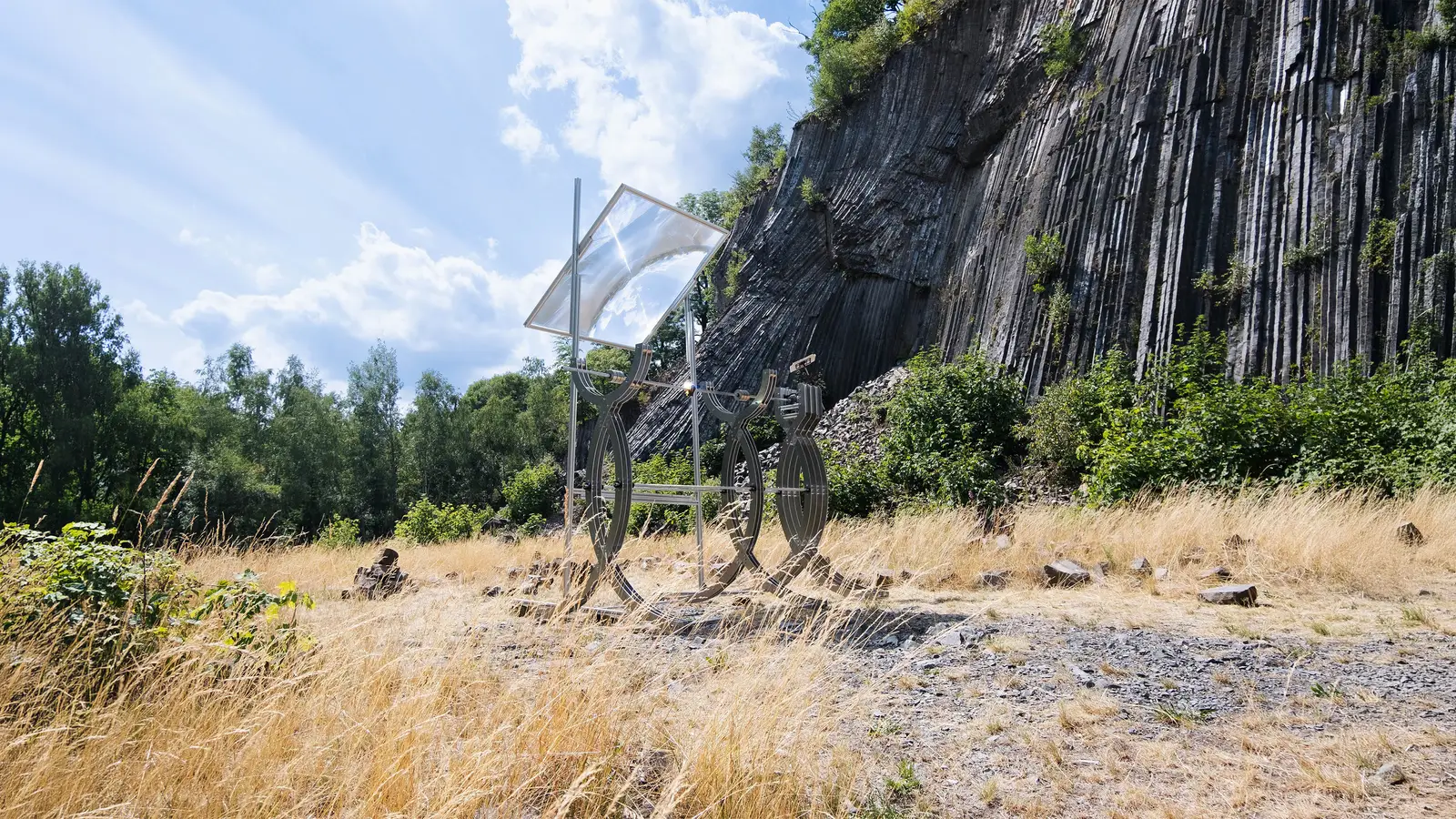
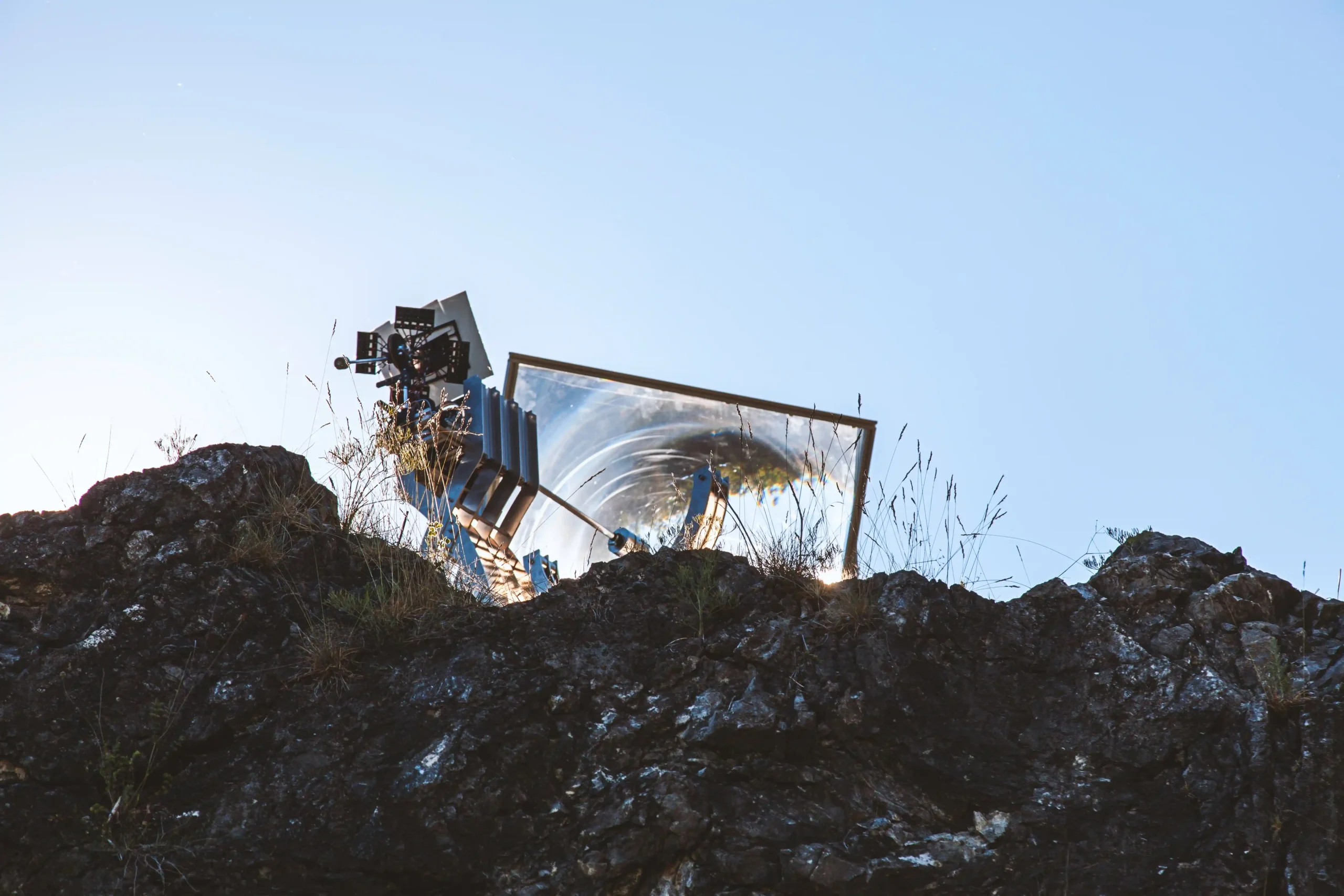
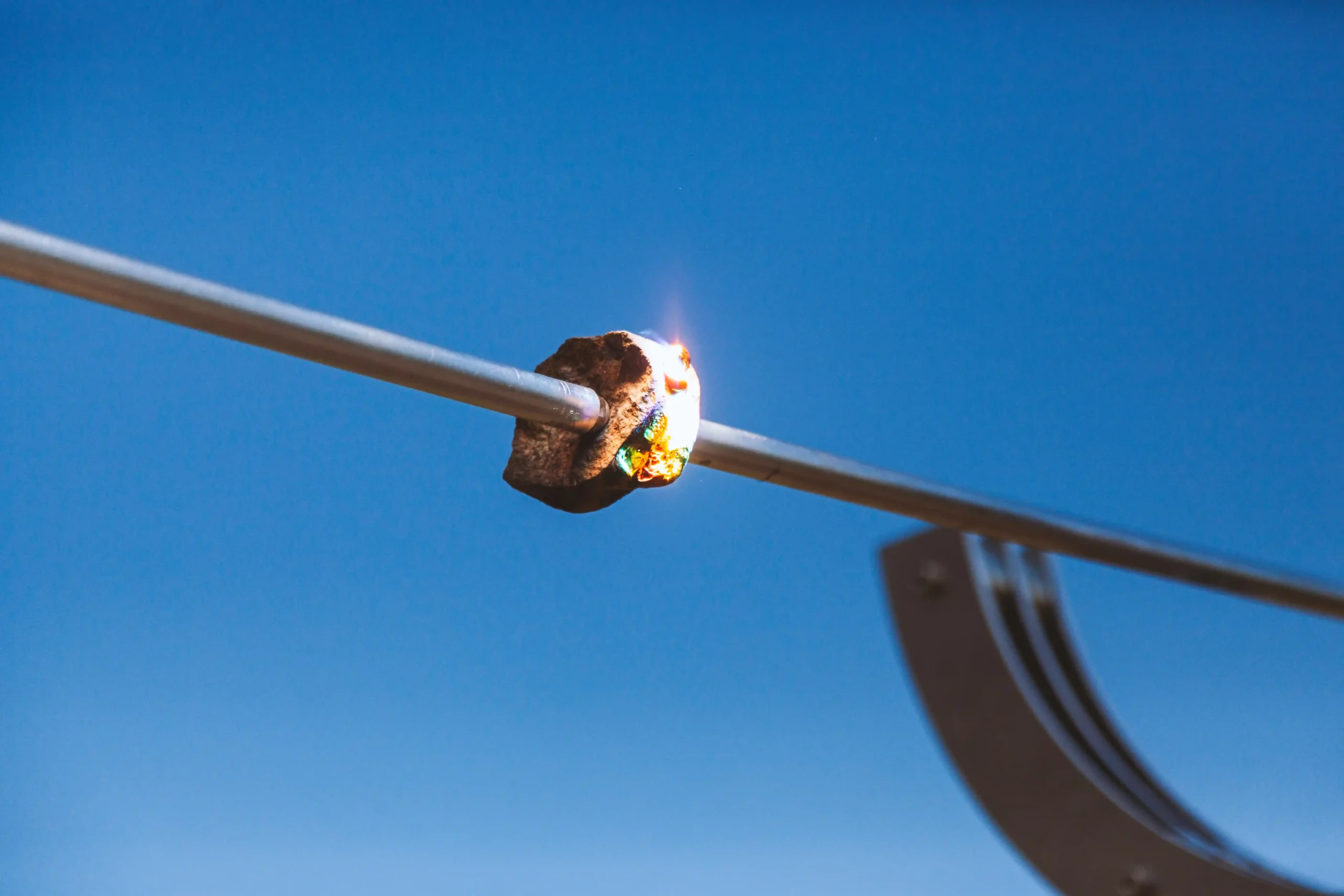
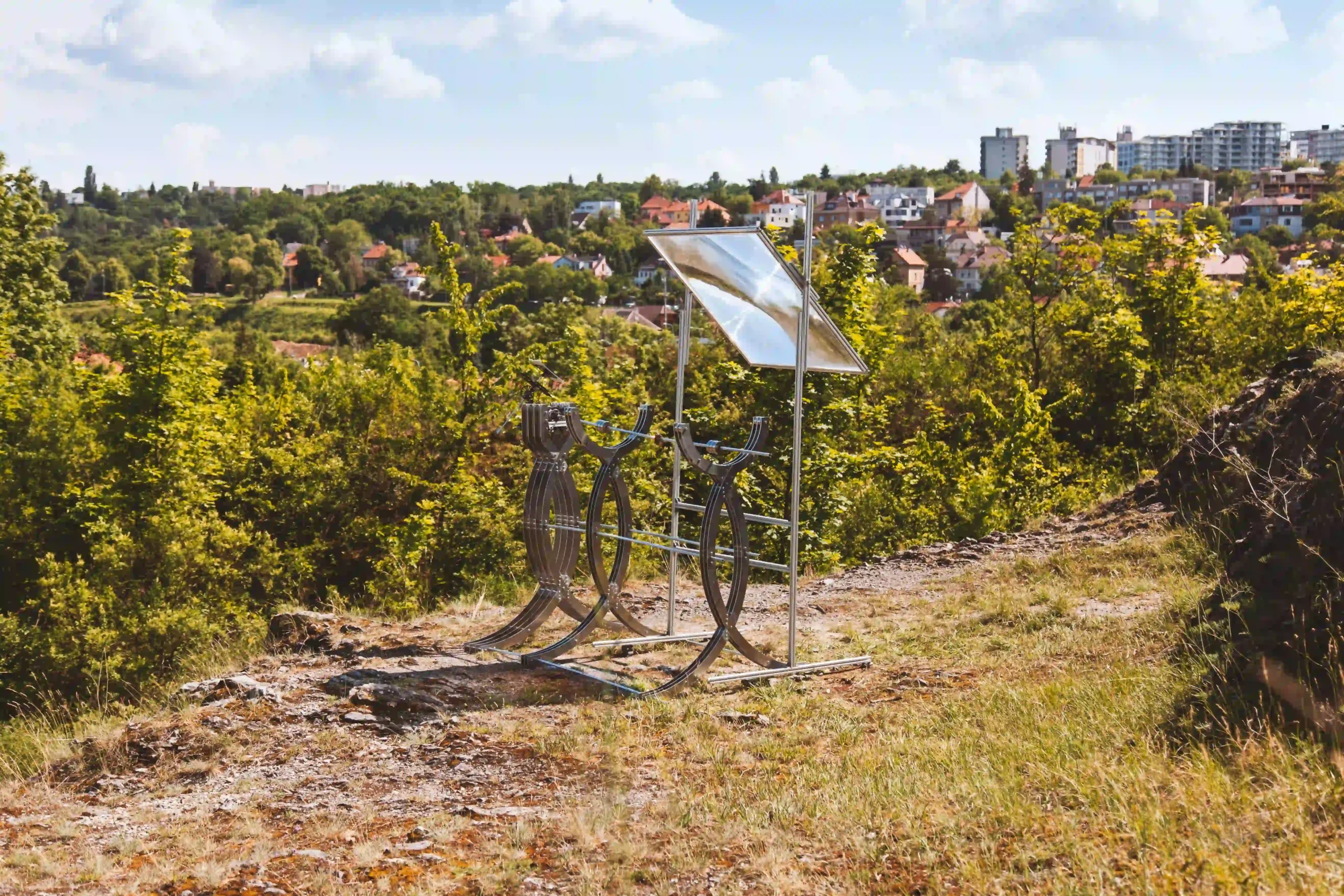
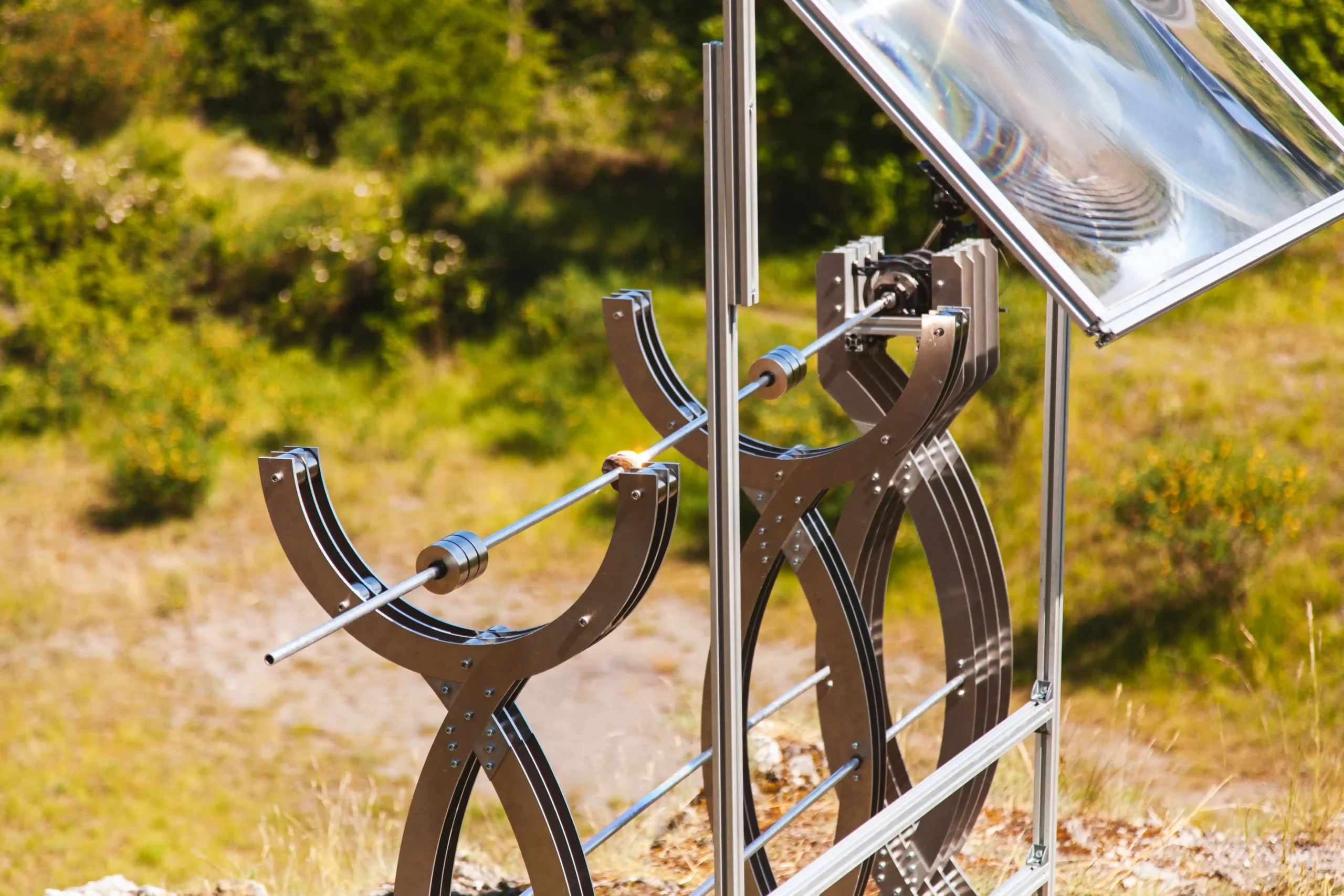
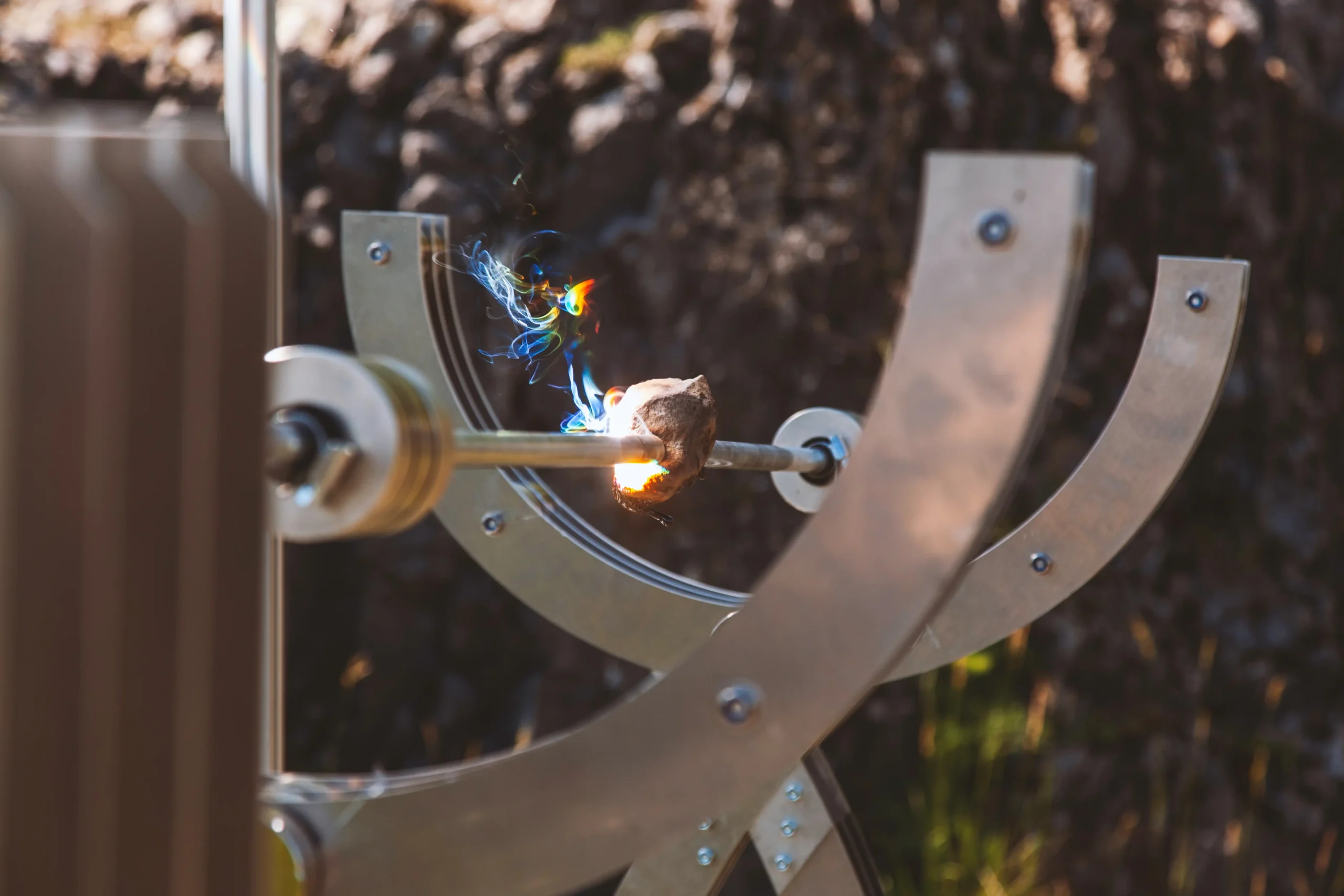
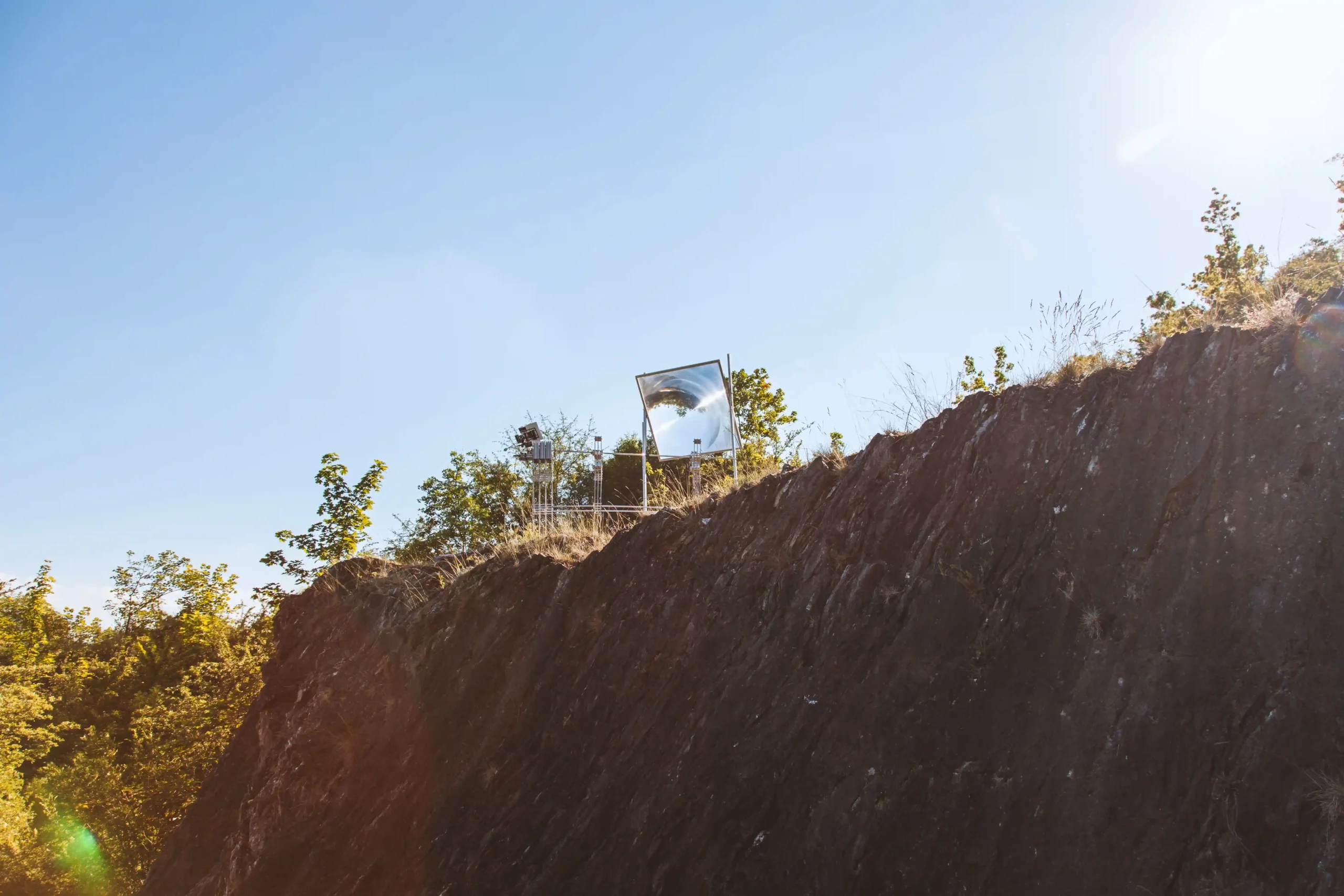
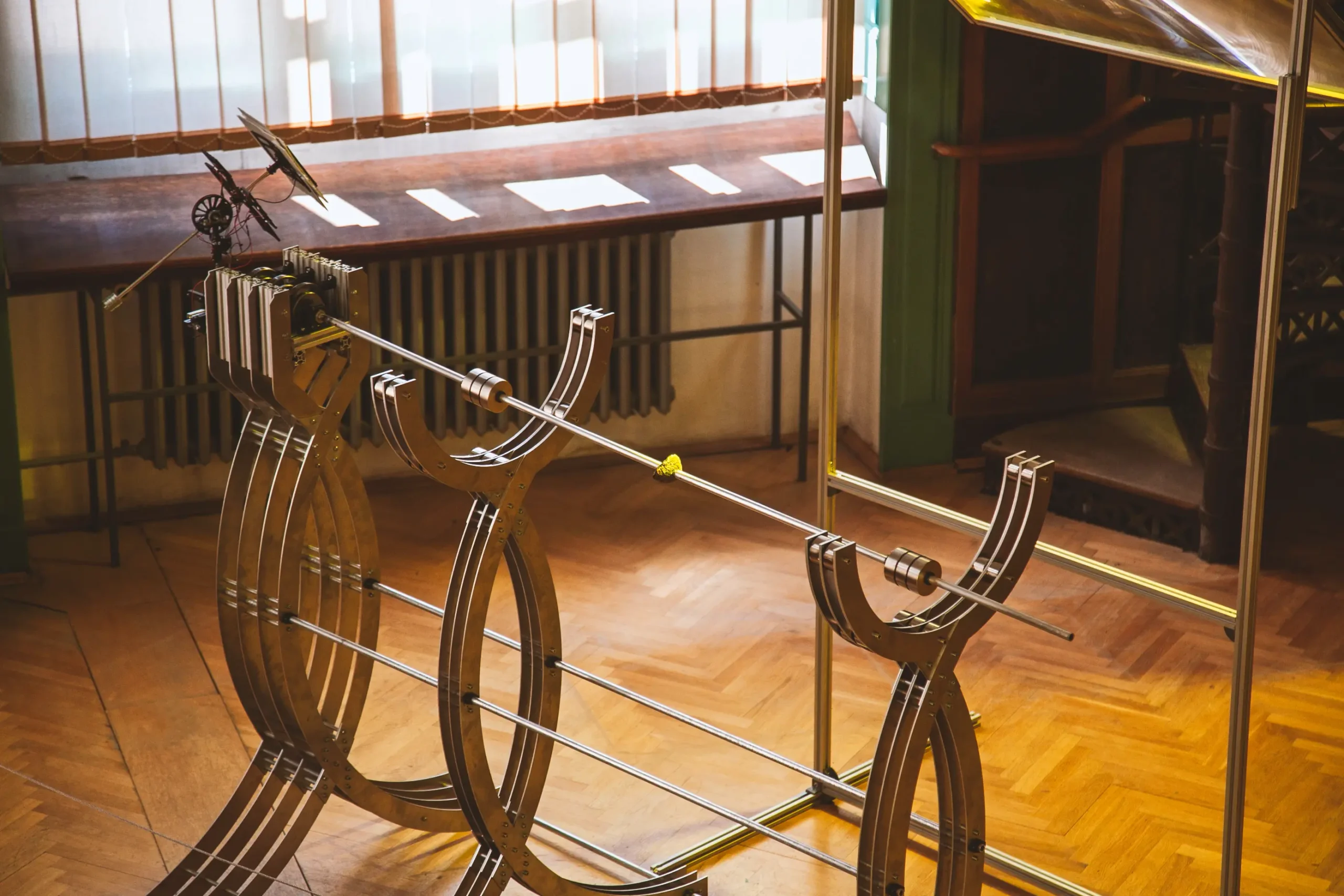
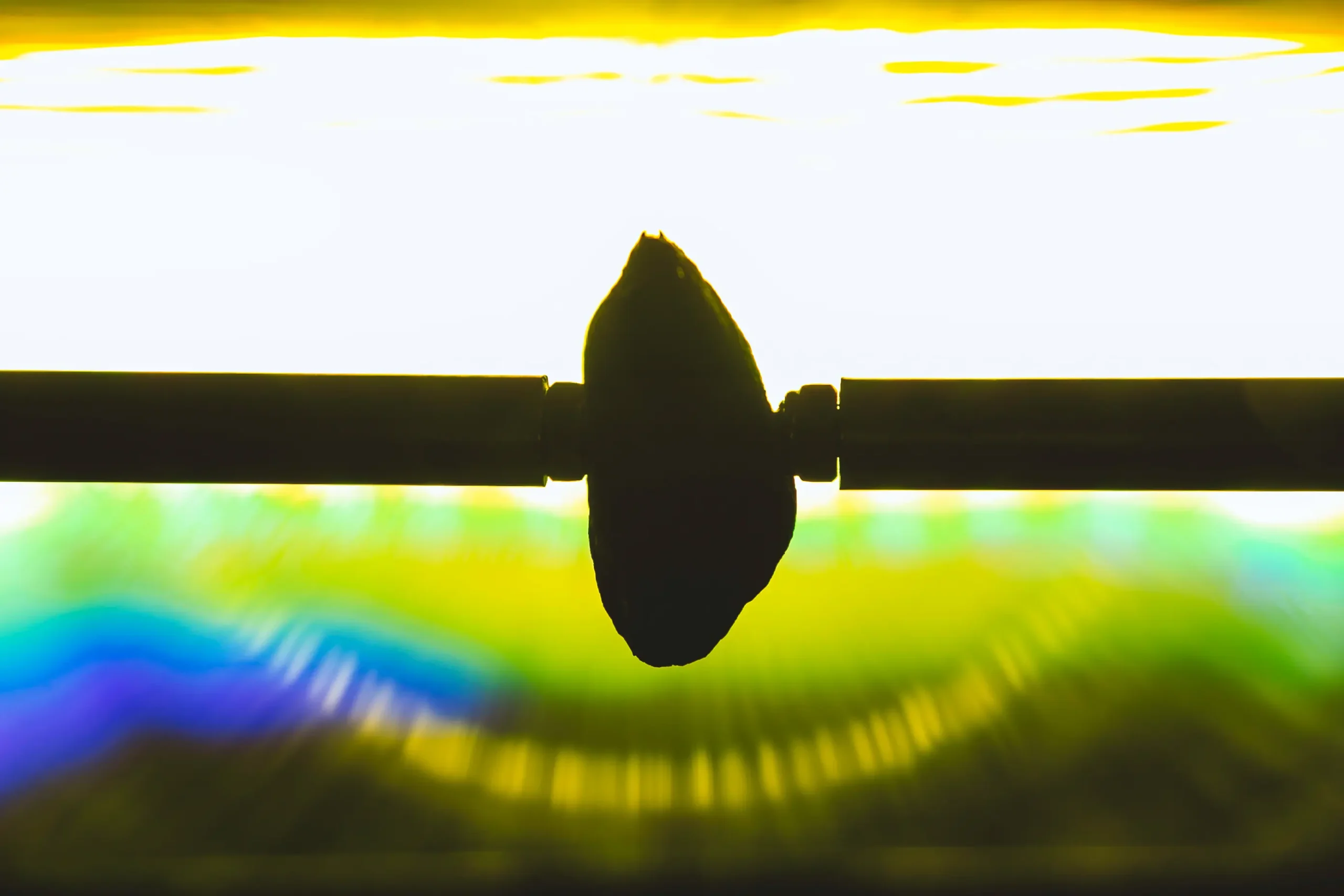
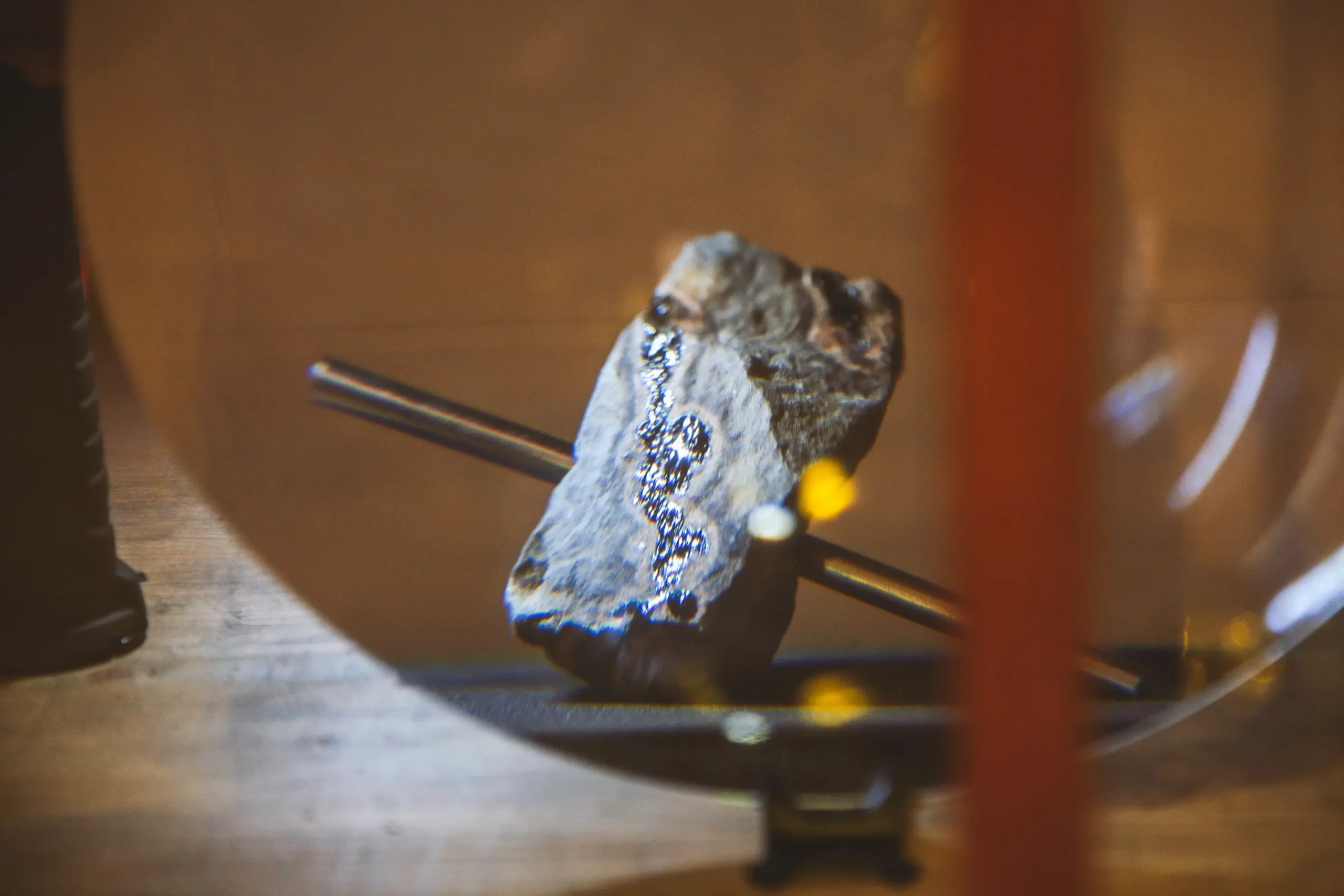
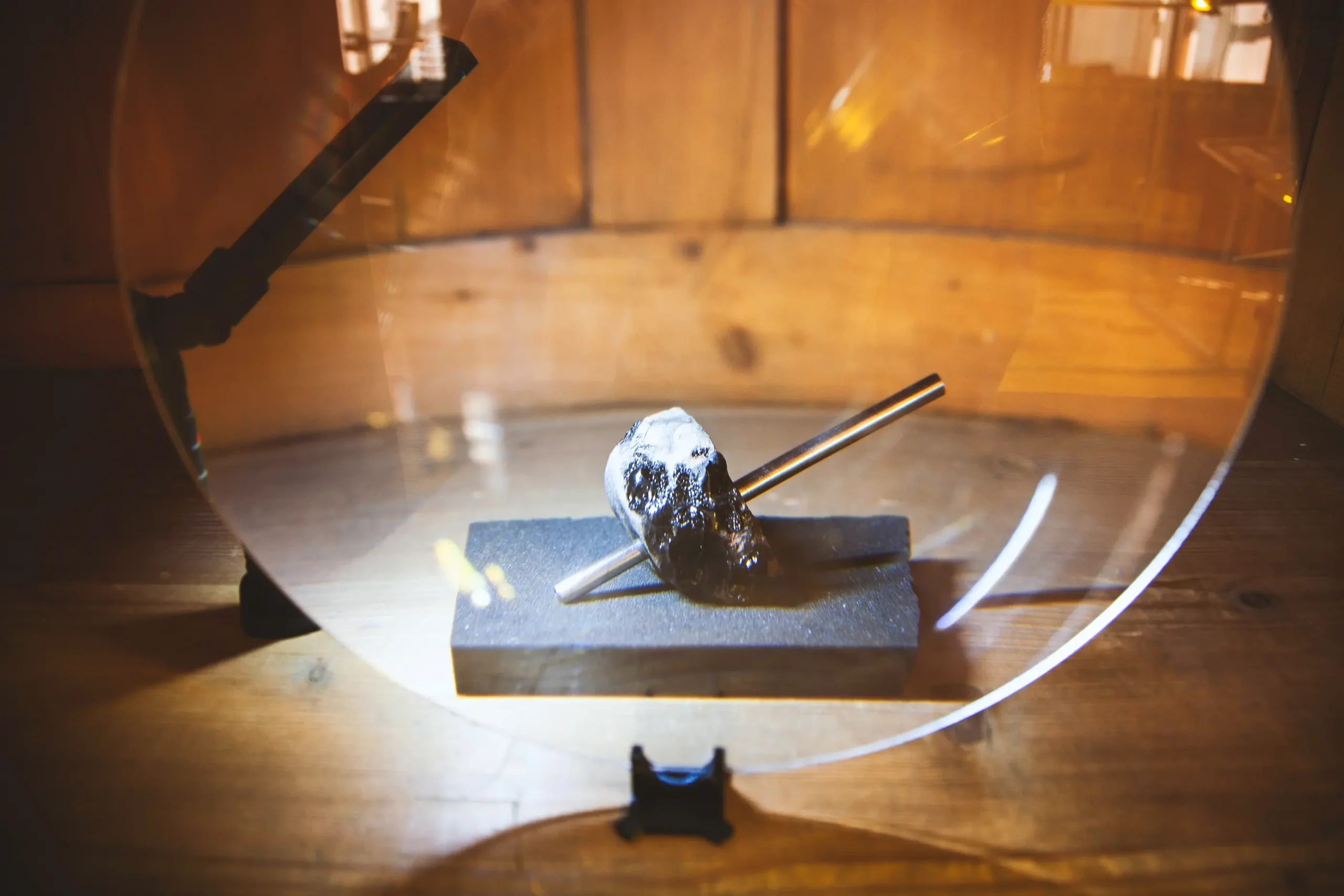
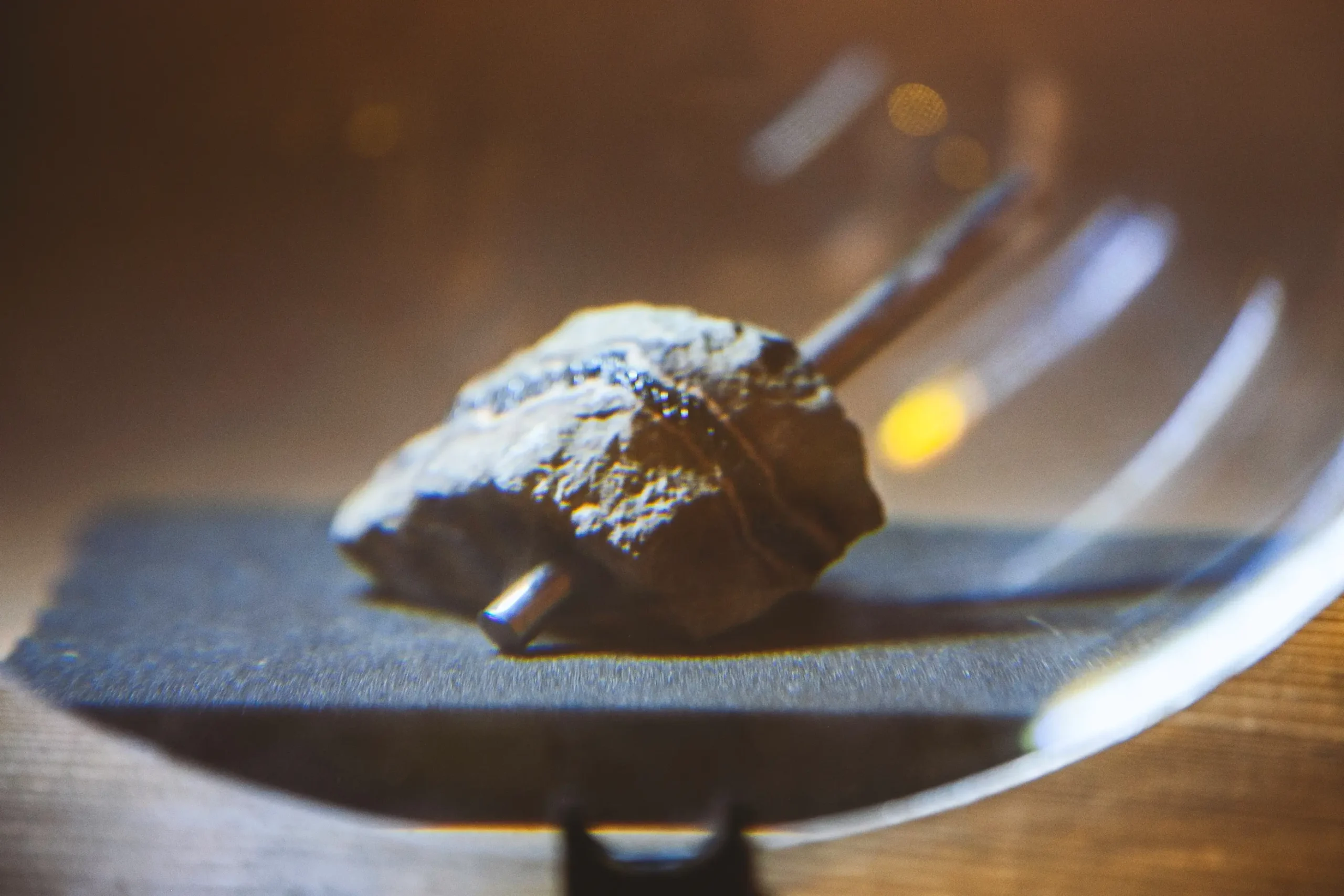
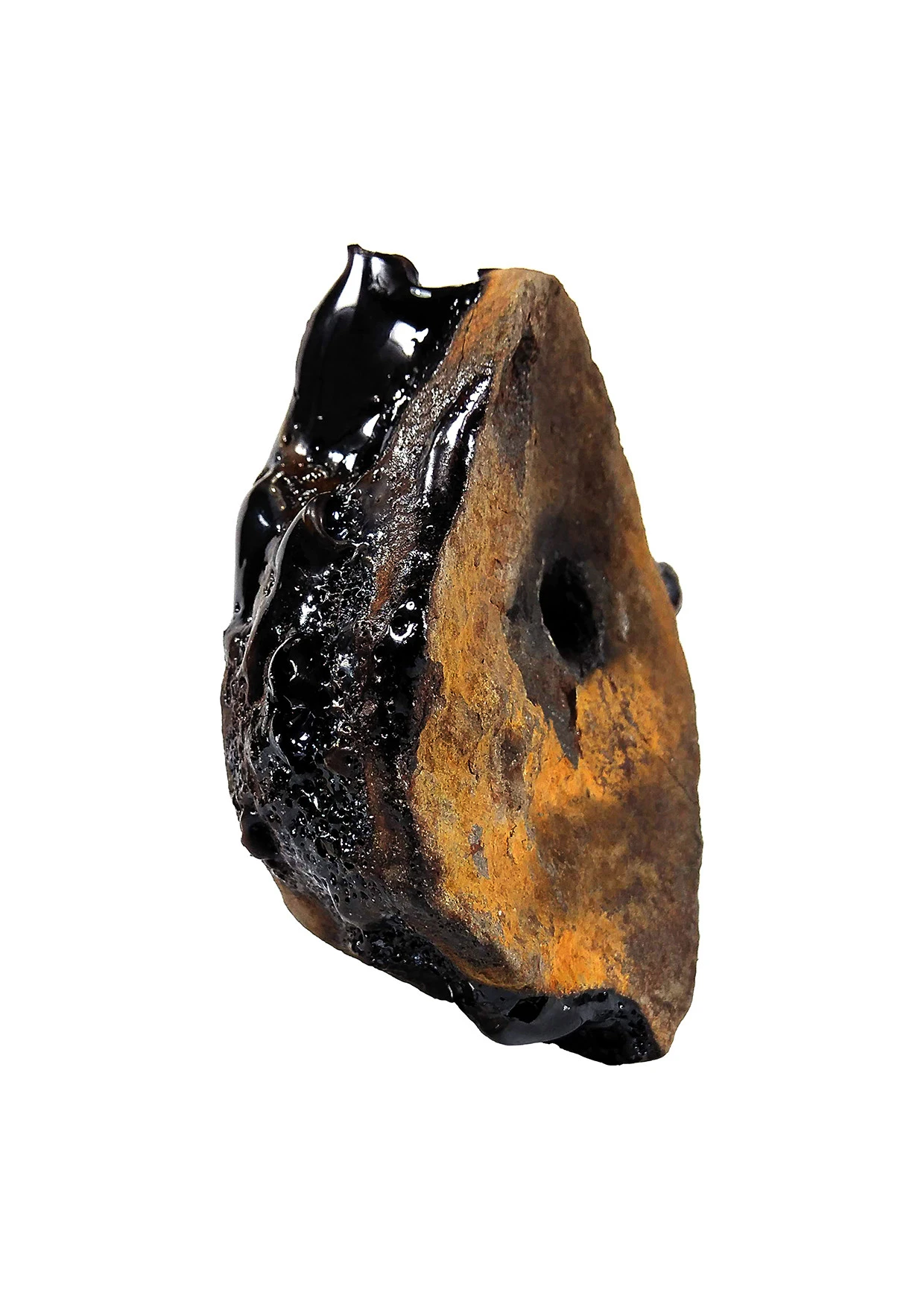
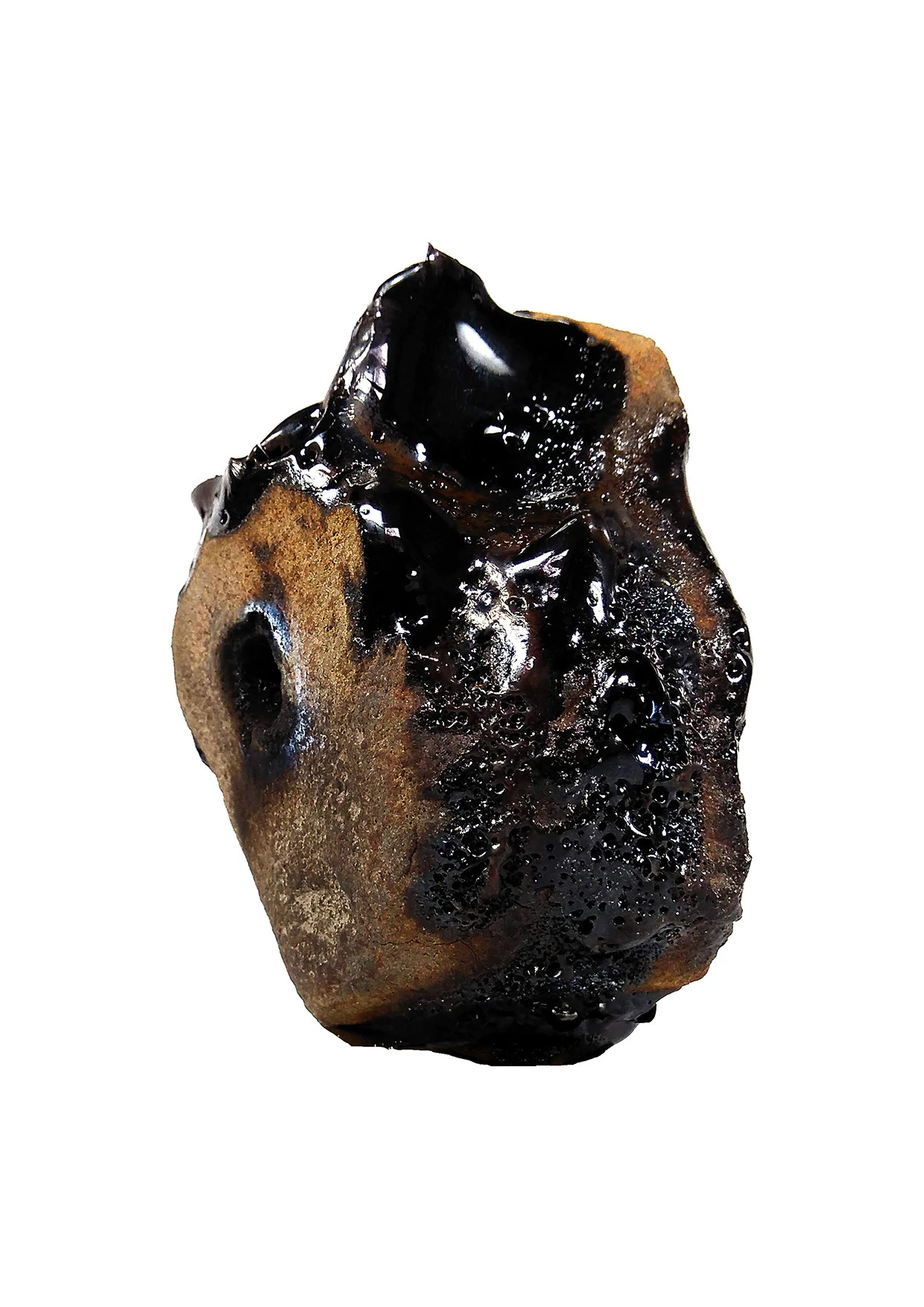
Autonomous laboratory installation; aluminum structure with suspended „calibration chamber“, closed optical-data circuit with LCD panel, polarizing membranes and environmental sensors; slow robotic/actuator choreography.. Aluminum CNC frame on combined aluminum profiles and LCD TV; polarizing filters sliding via linear actuators controlled by ESP32. Result is a continuous projection of water micro-world.
BASIC INFORMATION
TECHNICAL SPECIFICATION
CONTEXT AND ORIGIN
ARTWORK CONCEPT
EXHIBITIONS
CONNECTIONS
Series
Speculative Topographies
ID
2025-ST-KSN-01
Date of origin
28.1.2025
Technique
Autonomous laboratory installation; aluminum structure with suspended „calibration chamber“, closed optical-data circuit with LCD panel, polarizing membranes and environmental sensors; slow robotic/actuator choreography.
Dimensions
Variable; core apparatus approx. 2215 × 1800 × 1504 mm
Duration
Continuous, long-term loop operation
Software
AbsenceLoop Engine v1.0 — generative loop on Raspberry Pi in closed video-feedback loop; AI generative video decomposes sculpture elements into slow layers on white LCD screen.
Hardware
Aluminum CNC frame on combined aluminum profiles and LCD TV; polarizing filters sliding via linear actuators controlled by ESP32.
Data source
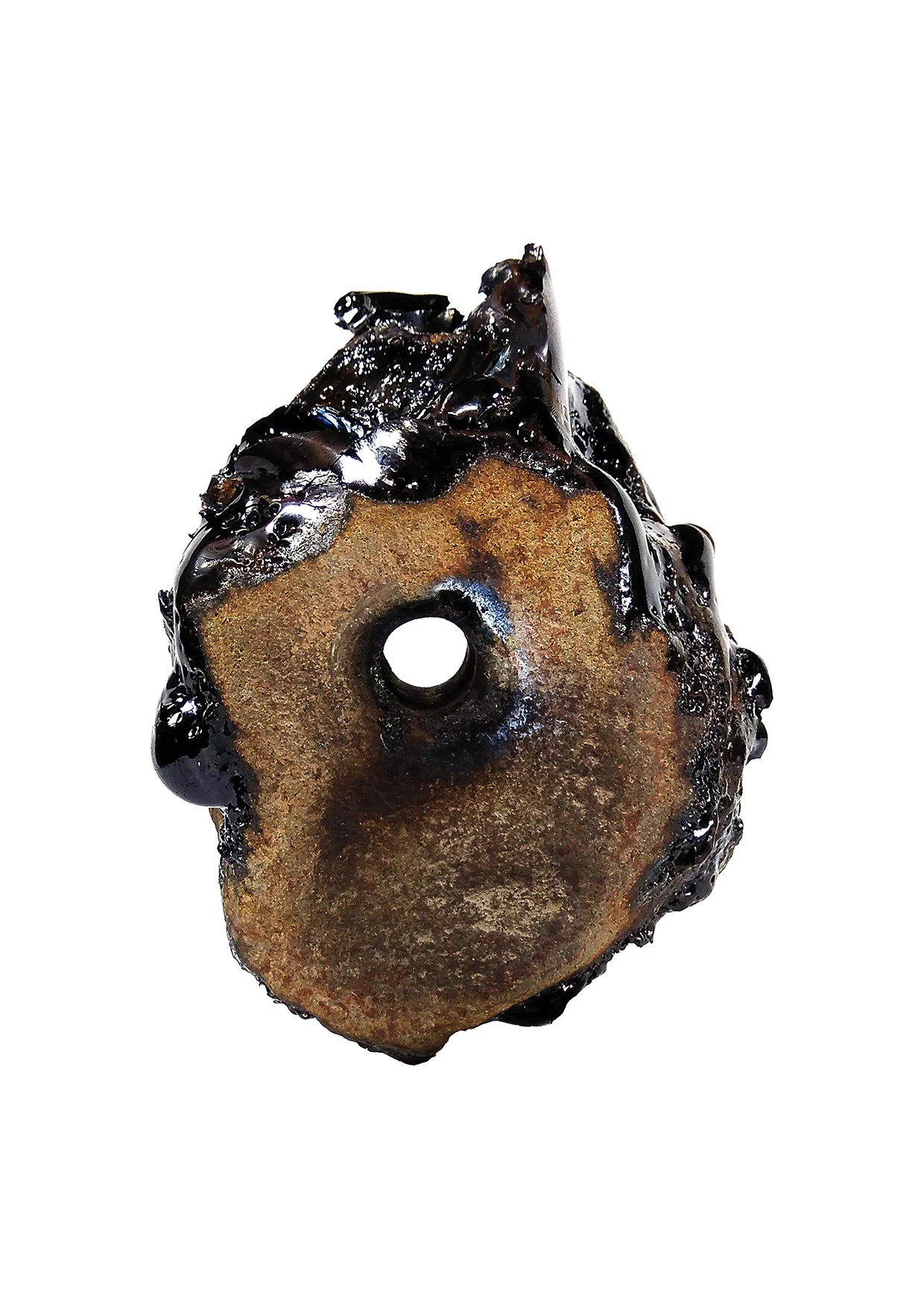
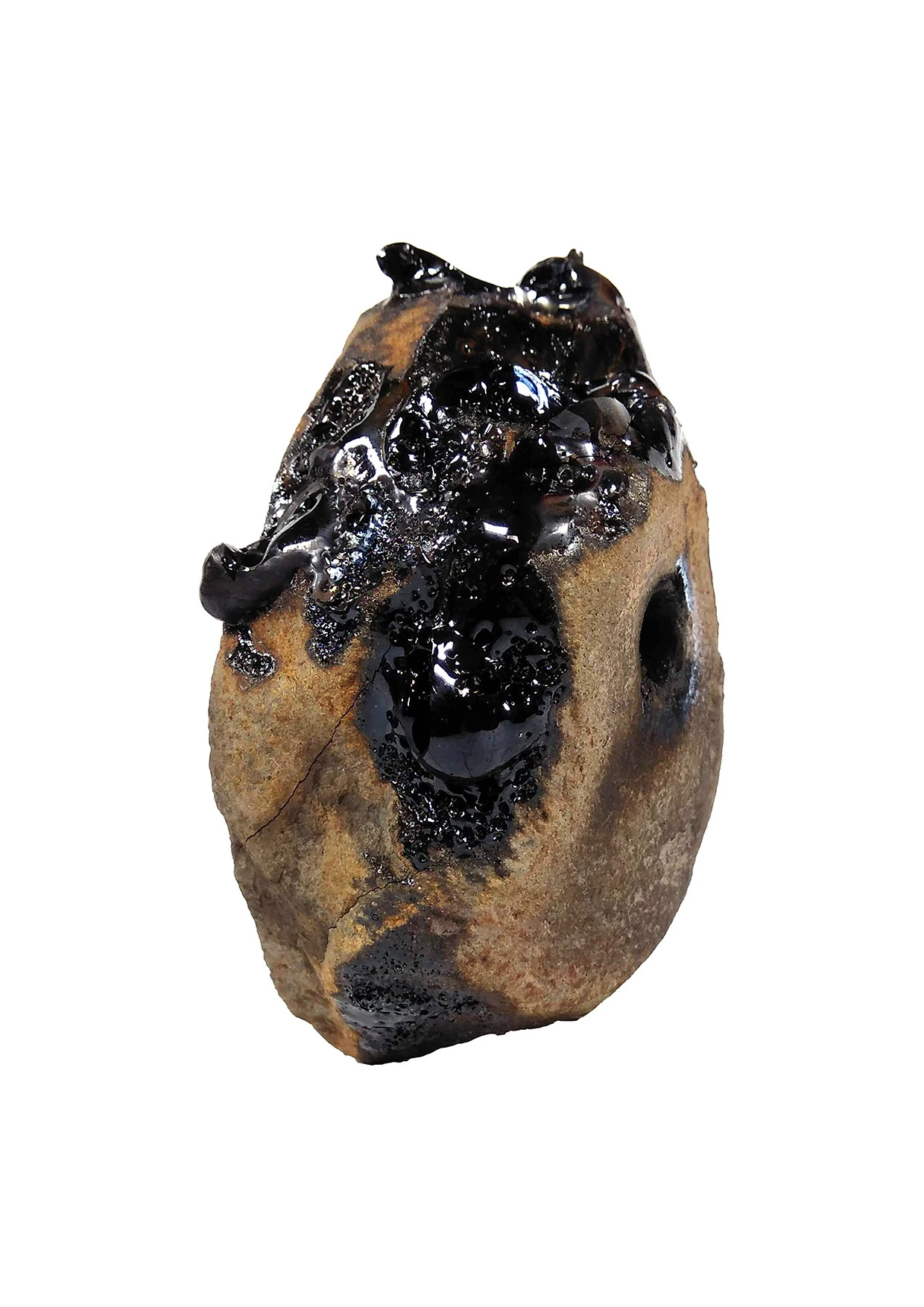
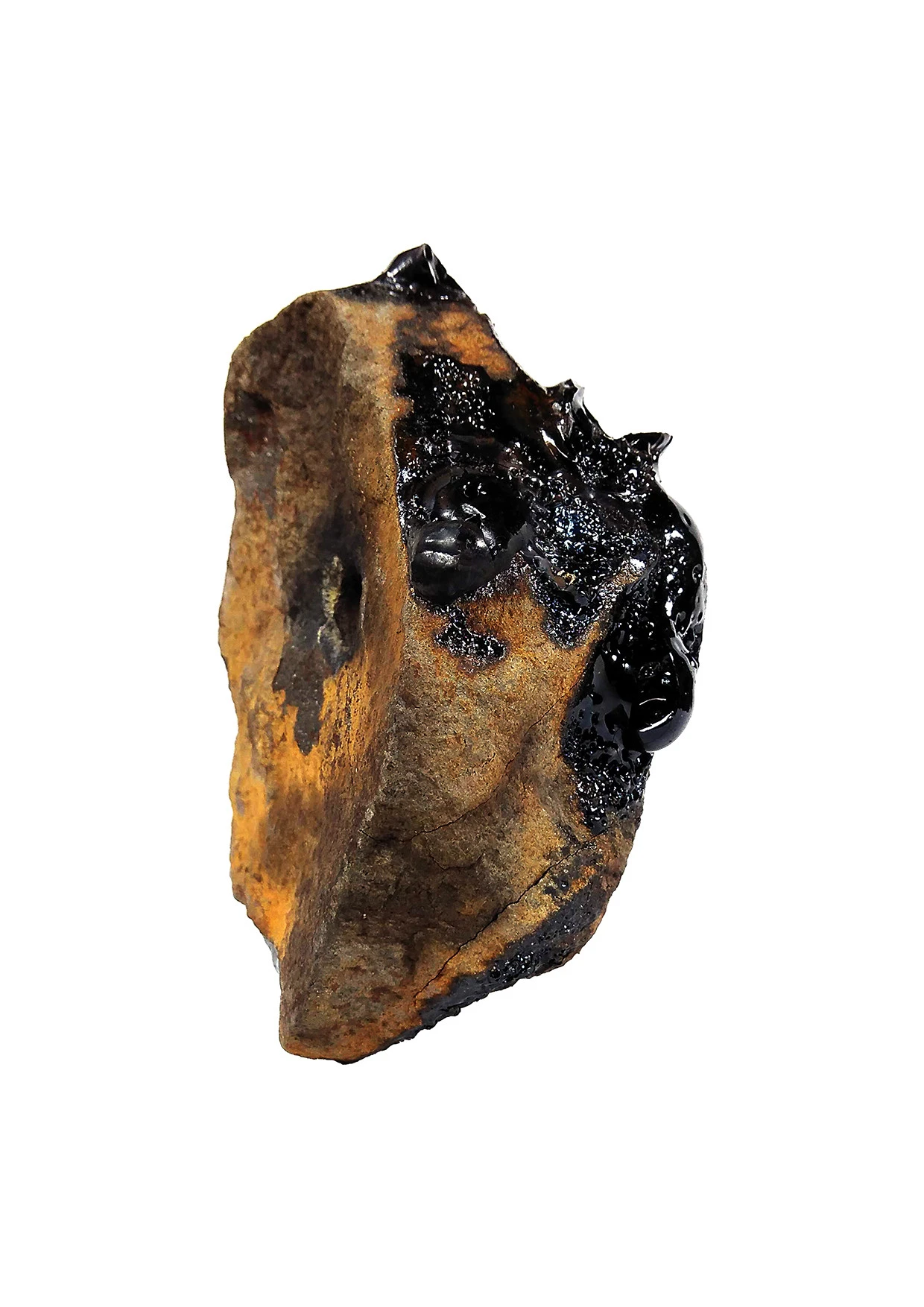
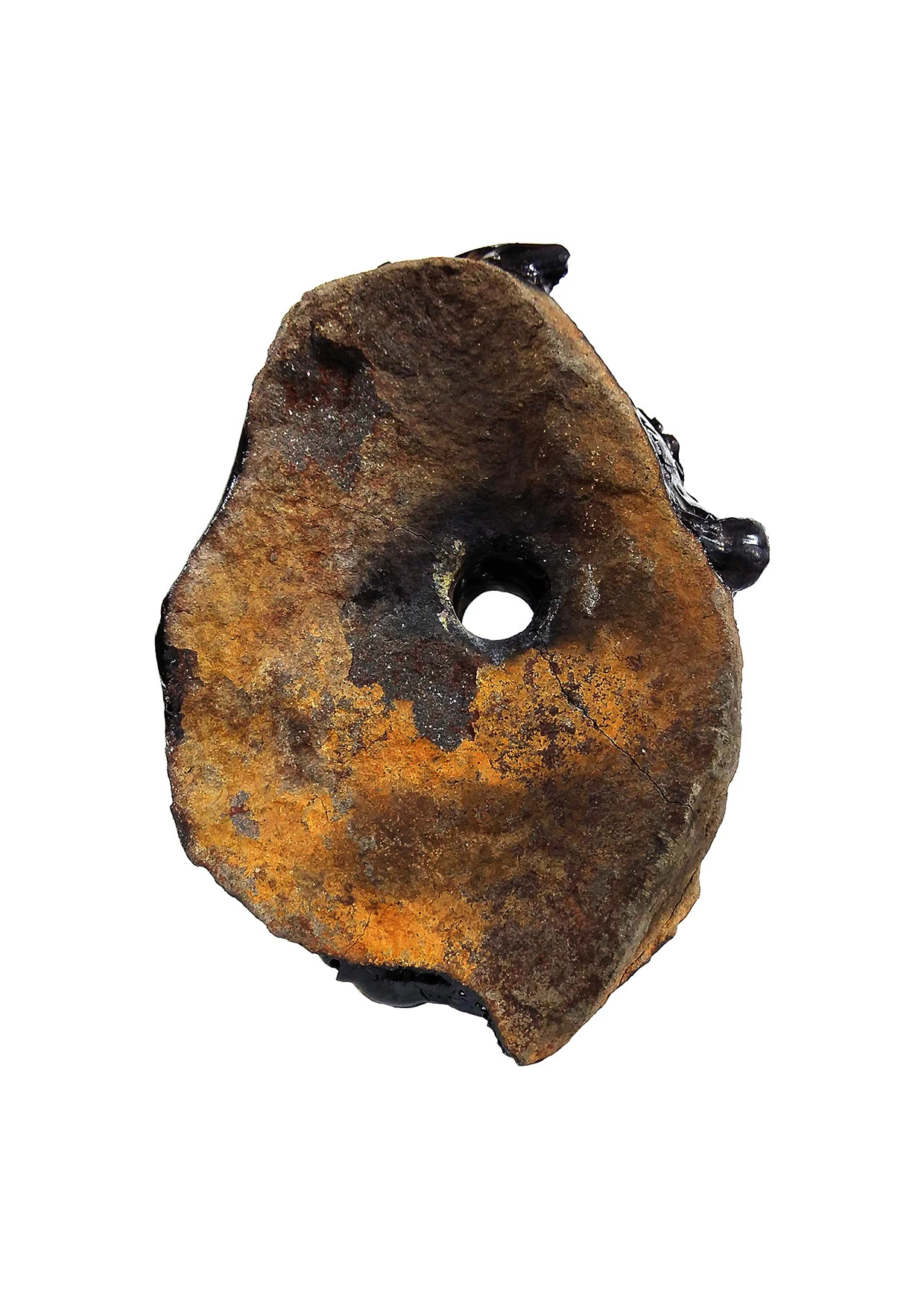
Fragments of the artwork itself captured as visual dataset; generative AI endlessly decomposes and reassembles them — the object continuously redefines itself.
Interaction
Indirect, based on video dynamics; arms respond to changes in generative loop and to viewer presence as one of impulses in autocalibration behavior of apparatus.
Kryštof Brůha’s installation in the exhibition Landscape of Absence evokes a laboratory apparatus that has broken free from human operation, continuing its activity in a kind of autonomous, posthumanist mode. The object speaks in the cold “language” of metal and scientific procedures: instead of an expressive gesture, it offers precision, measurement, calibration, and algorithmically controlled movement, suggesting that decision-making here takes place outside human emotionality.
A key role is played by technologies commonly associated with industry and research—robotic arms and LCD displays complemented by polarizing film. These tools are not merely means of production, but become integrated into the visual and semantic layers of the artwork: the robotic arm functions as the choreographer of the machine’s body, while the polarizing film, which obscures and reveals the image on the LCD display, creates a semi-permeable membrane between data and physical reality. In the background, algorithms and machine learning methods determine the fluctuating form of the installation, introducing an element of instability and an open-ended process that gradually learns, adapts, and further modifies the forms of its own “landscape.”
Thus, Brůha’s object references technological progress not only formally, but through the very structure of its operation: rather than a finished, static artifact, it resembles a system capable of producing new configurations, relationships, and situations. The tension between the sterile aesthetics of industrial materials and the speculative, almost fictional character of the installation creates space for reflecting on how our current tools—robotic arms, algorithms, and machine learning—will one day be perceived in a landscape where humanity is no longer the center.