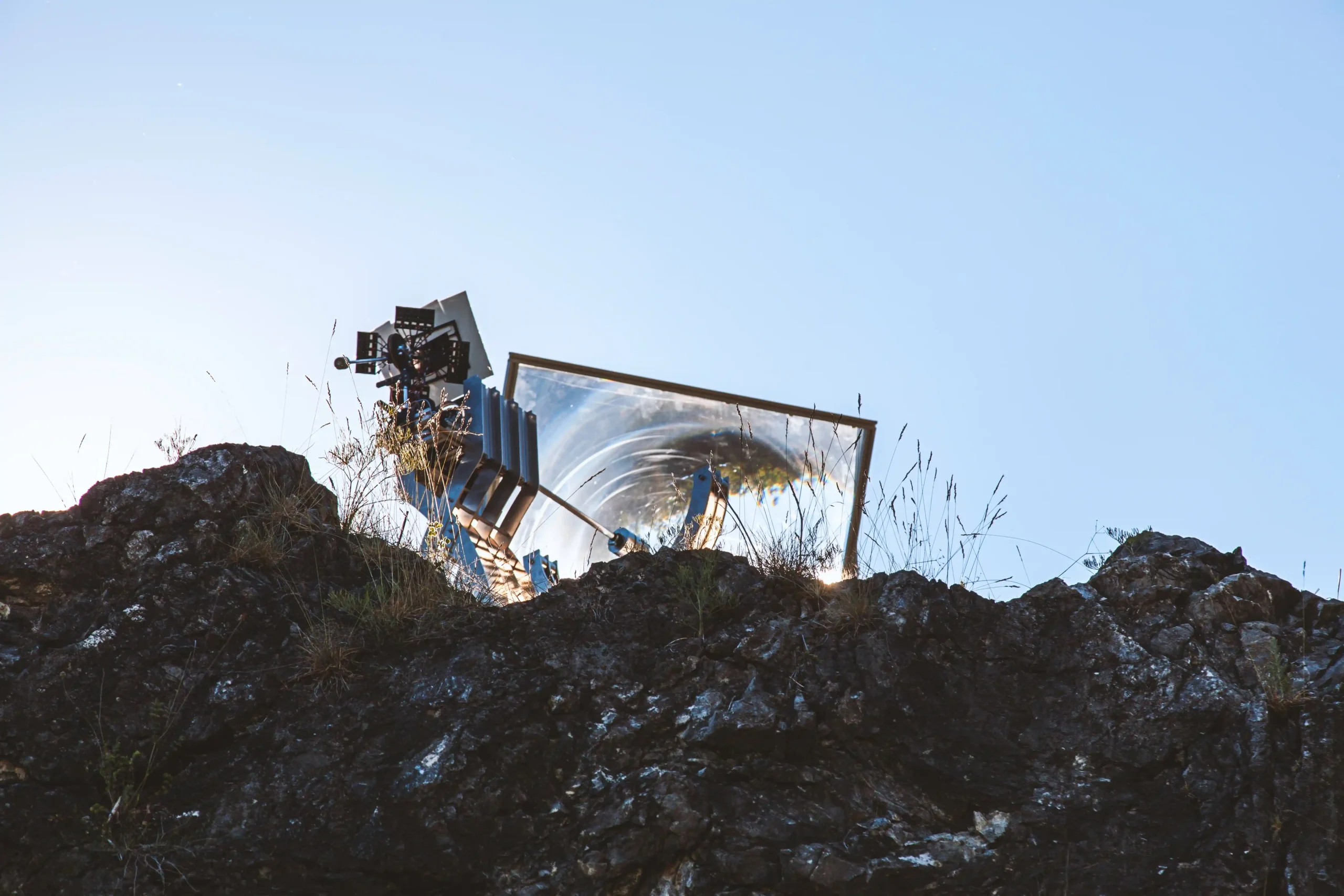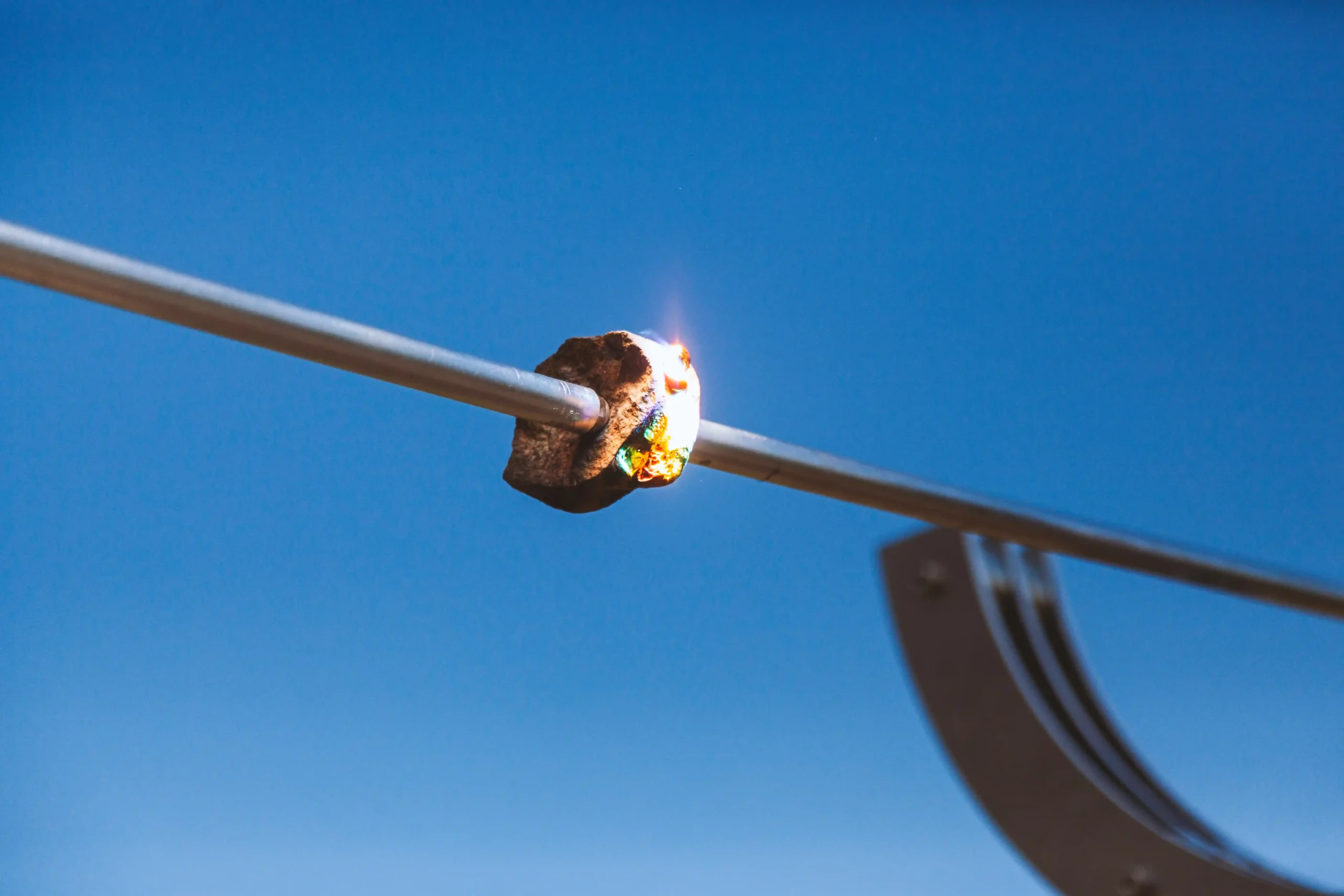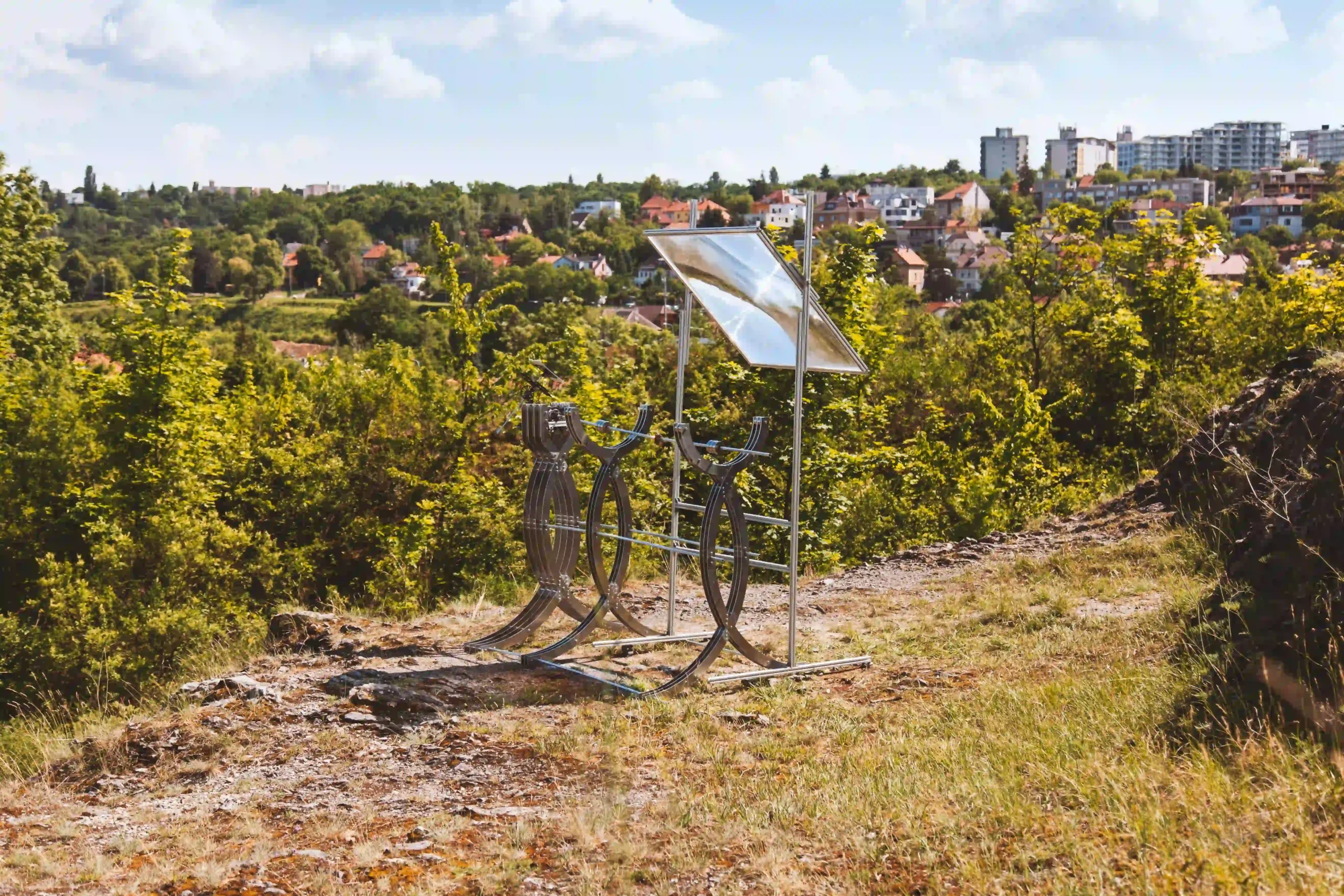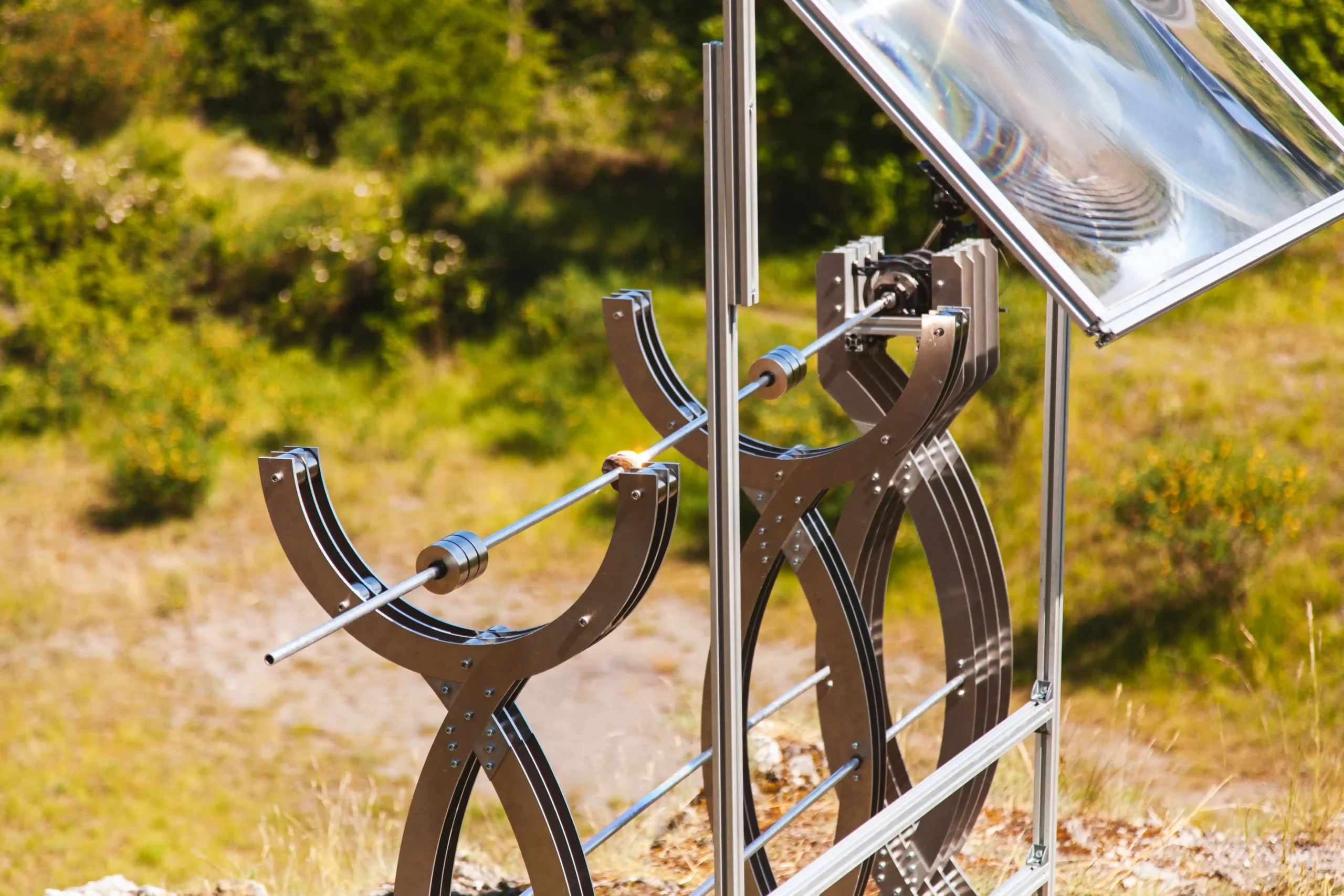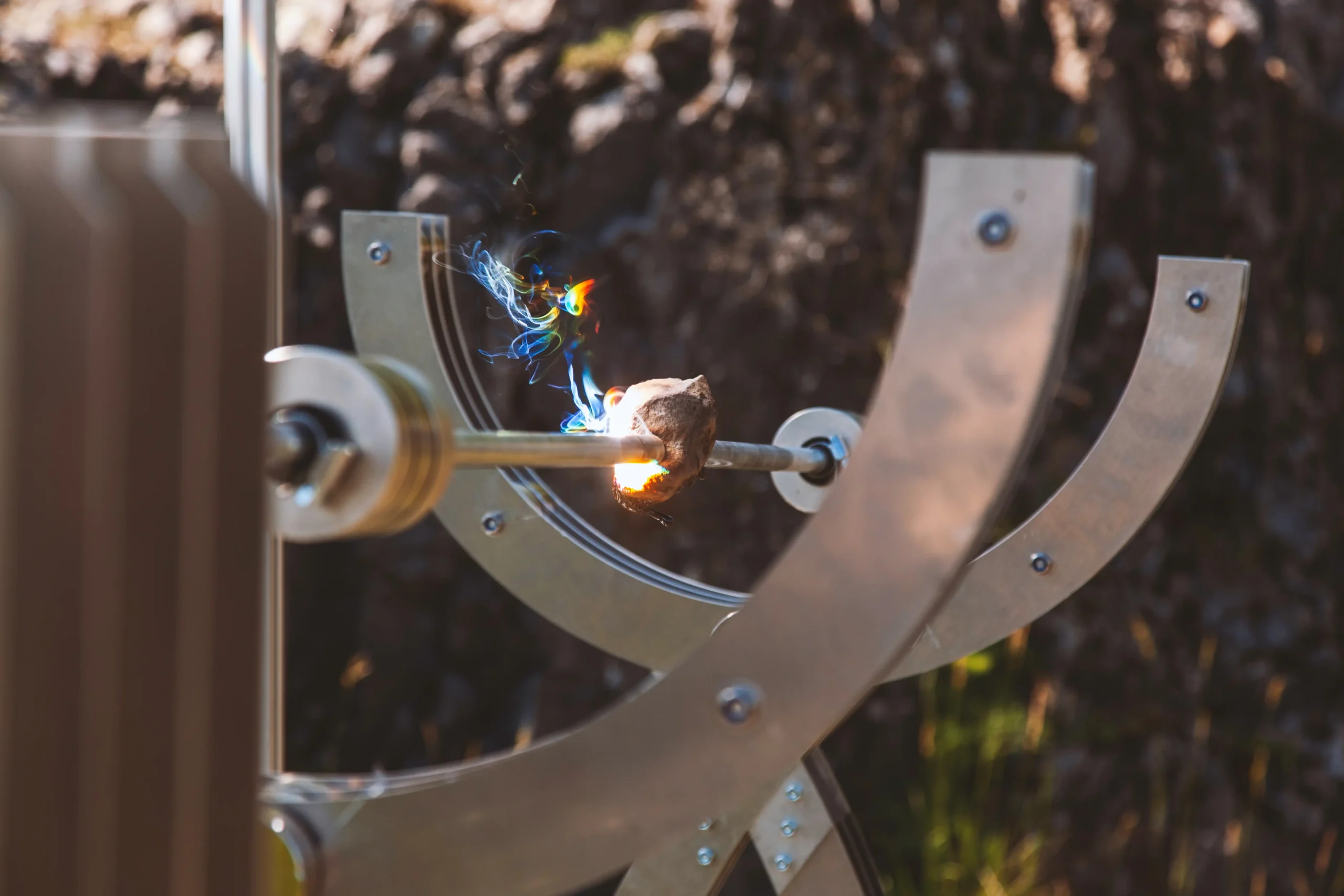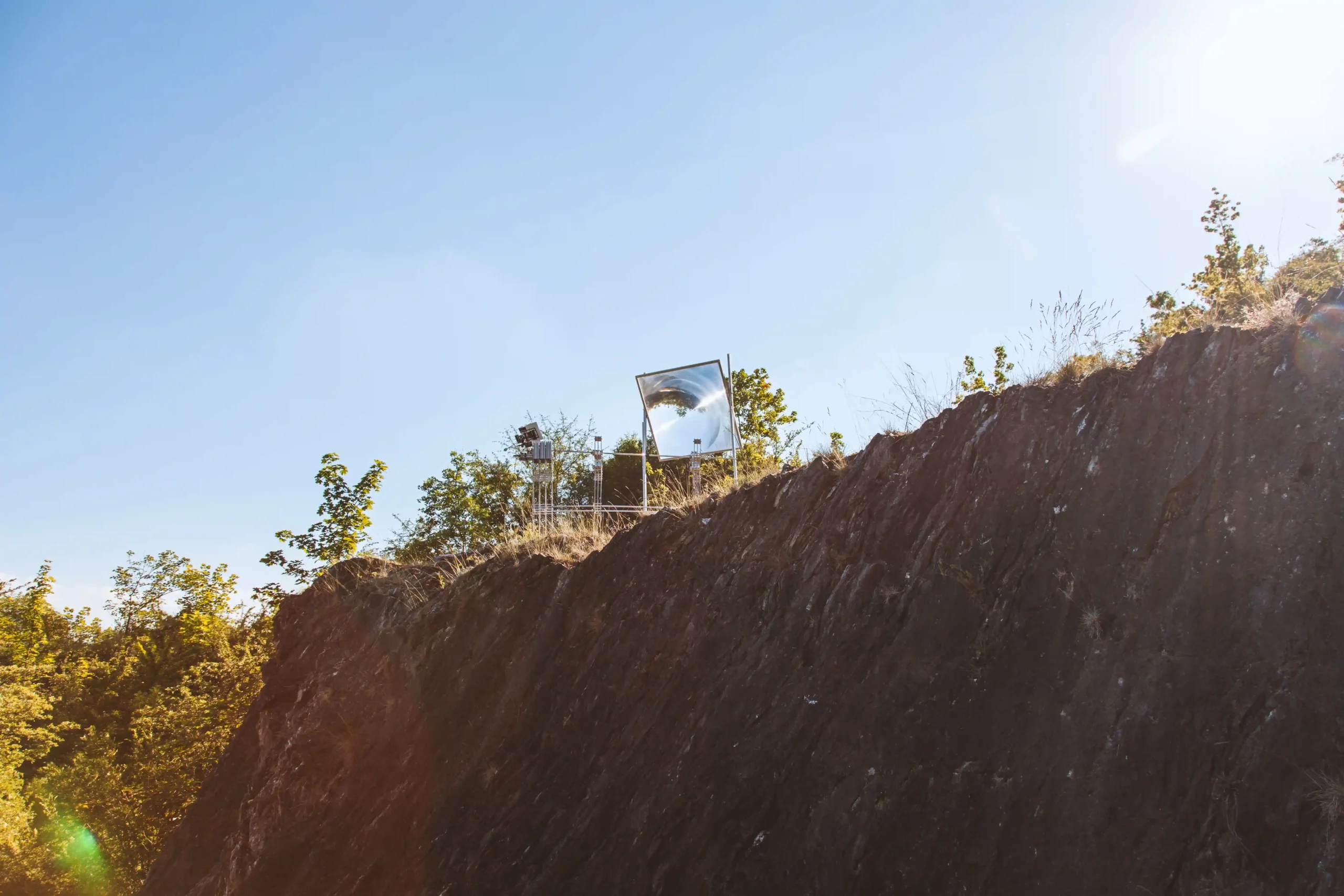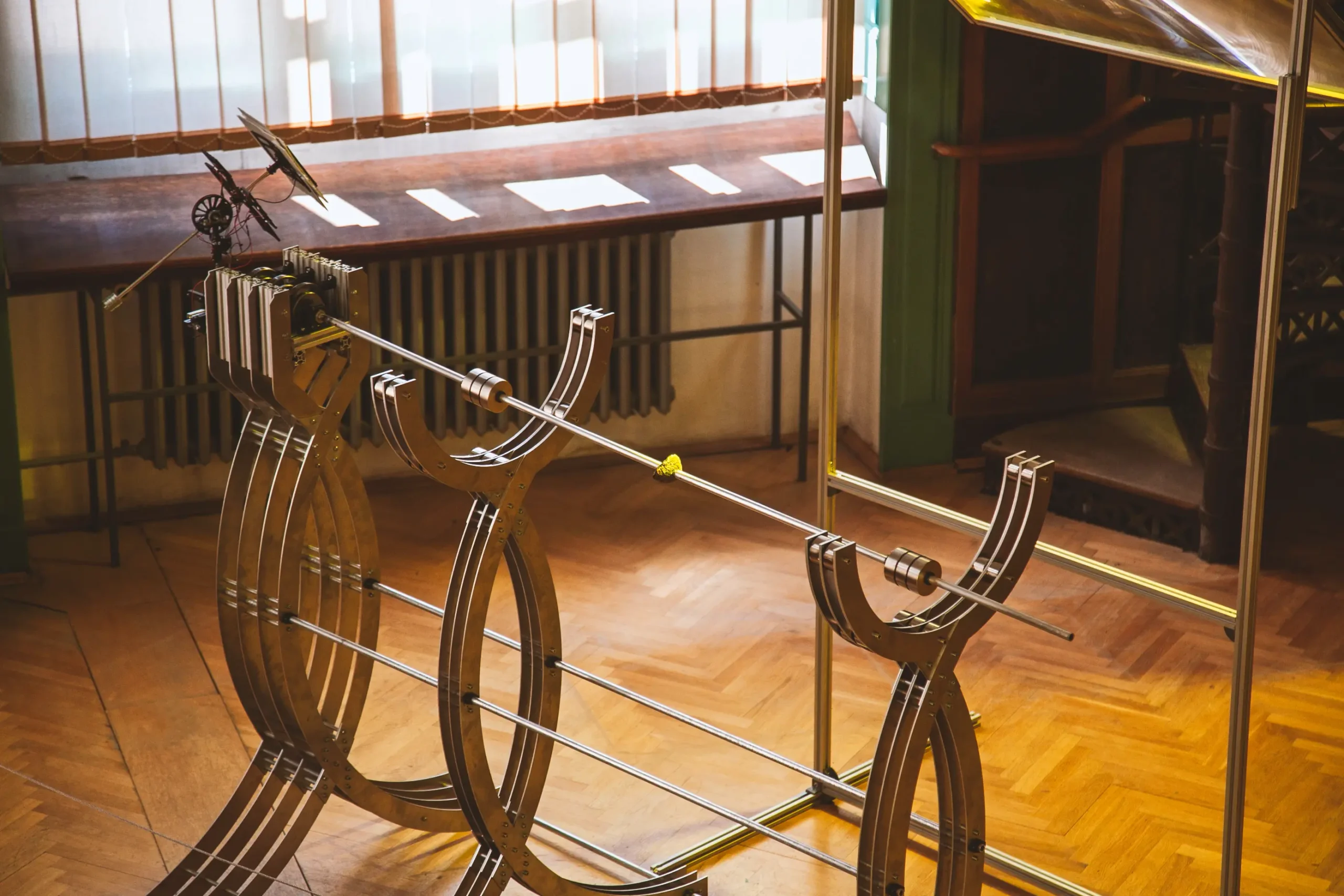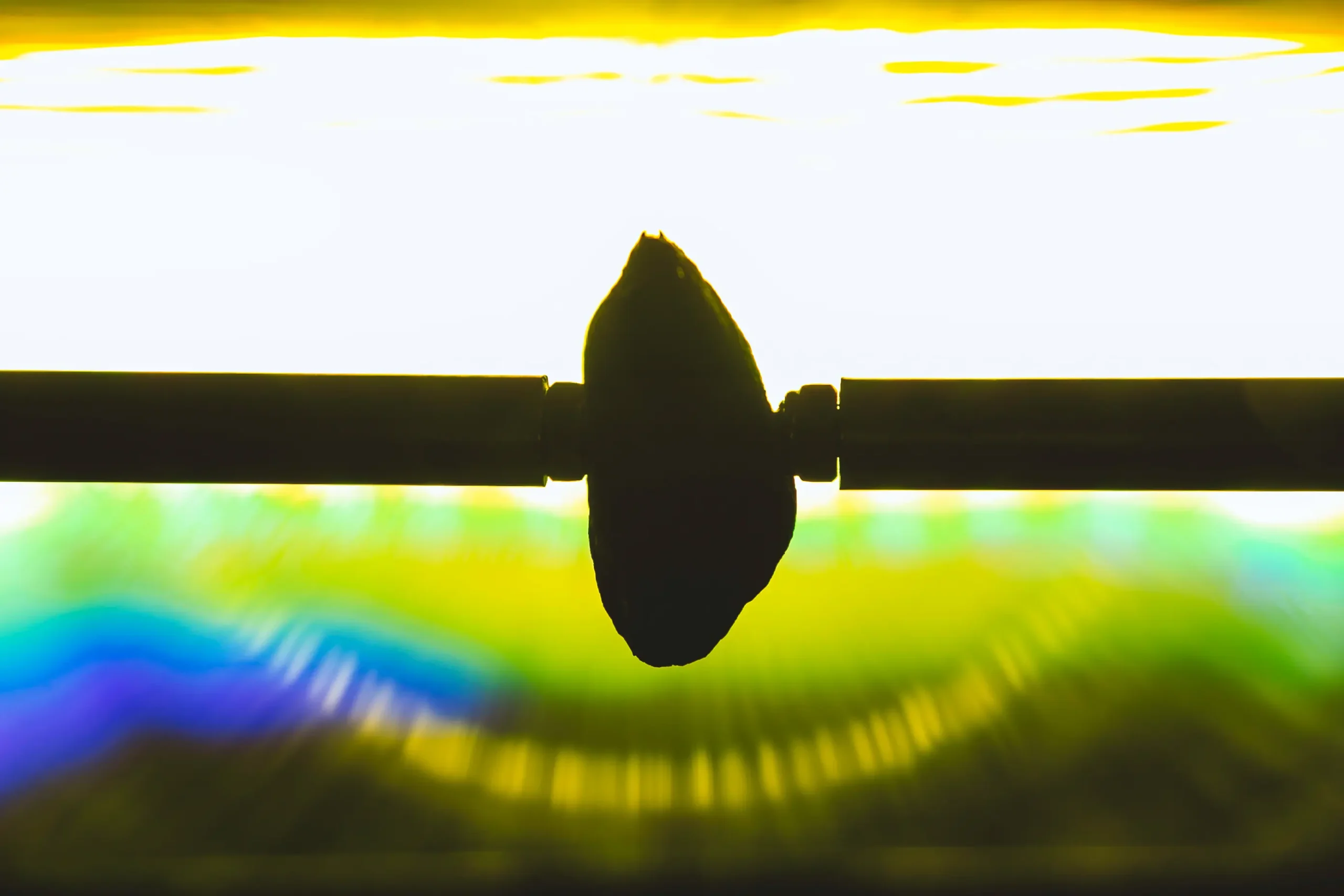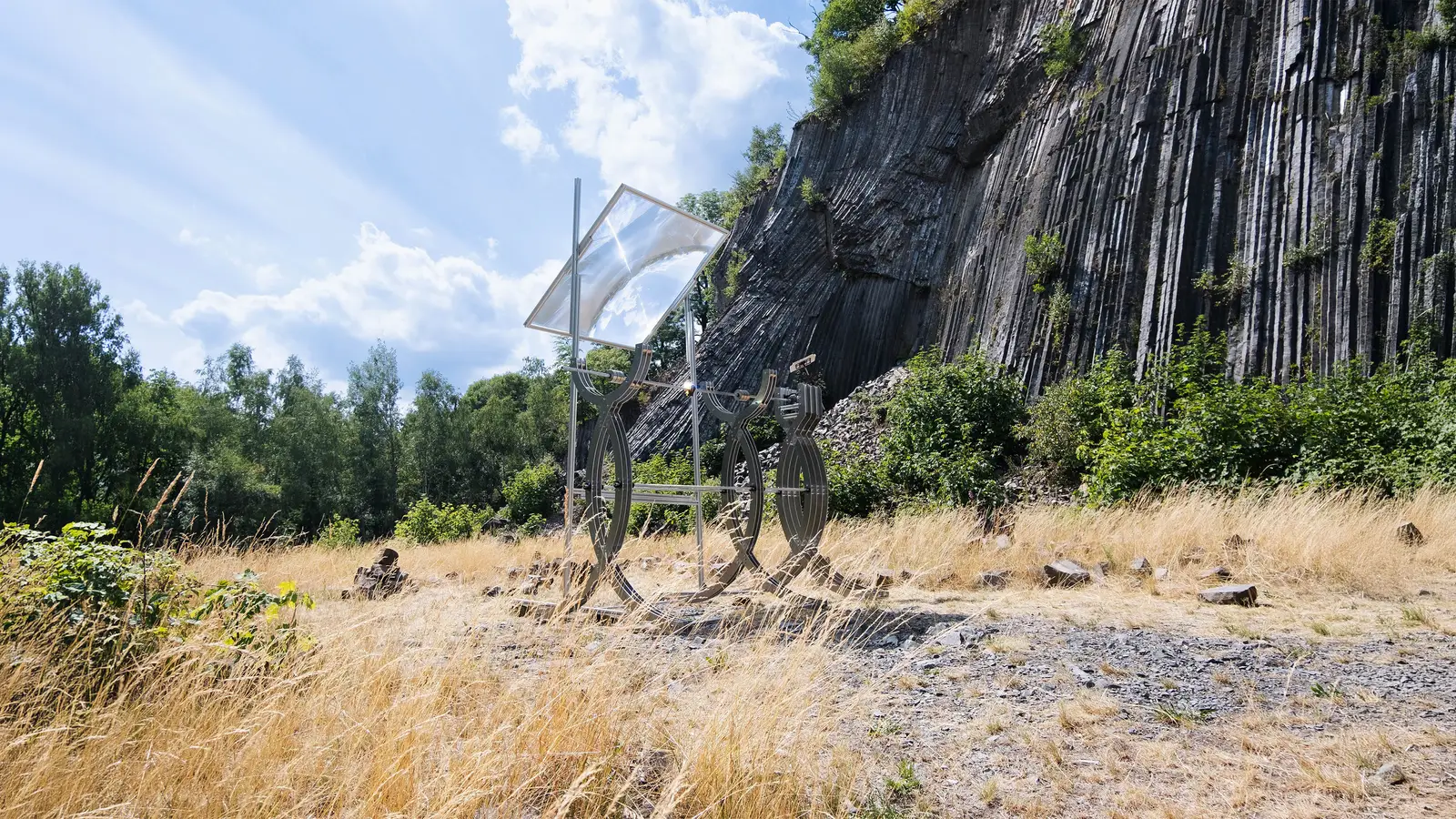
Spektraflux / EN AW-6061 T6 / PMMA / pump / microcontroller. Microcontroller STM32G041C8T6, Wi-Fi module ESP-01S, ROVER 20 CE pumps, power LED strips Result is a continuous projection of water micro-world.
| Series | Phantasma Electromagnetica |
| ID | 2024-PE-AUF-01 |
| Date of origin | 9.10.2024 |
| Technique | Spektraflux / EN AW-6061 T6 / PMMA / pump / microcontroller |
| Dimensions | 5500 × 7000 mm |
| Duration | 20 min cycle |
| Software | Firmware in C (STM HAL), STM32 Cube IDE, Matlab (for scenario generation) |
| Hardware | Microcontroller STM32G041C8T6, Wi-Fi module ESP-01S, ROVER 20 CE pumps, power LED strips |
| Data source | Measurement of electromagnetic activity around the sculpture using DIY Priezor — open source antenna |
| Interaction | Mapping of technological activity of urban infrastructure |
| Location of origin | Signal Festival 2024 / Náměstí Václava Havla / Prague / Czech Republic |
| Type of exhibition | Festival installation |
| Curator | Pavel Mrkus |
| Award | Selected in Signal Calling 2024 competition |
| Collection | Signal Creative |
| Photo | Tomáš Slavík, Dušan Vondra |
| Author of text | Kryštof Brůha |
| Collaboration | Signal Festival and PrusaLab (Josef Průša’s prototype workshop) |
| Project lead | Leoš Hort |
| Electronics | Aleksandar Ristić |
| Mechanics | Šimon Stupka |
| Thanks | PrusaLab (Josef Průša, Ondřej Kašpárek, Tereza Vanikova, Stanislav Wasserbauer, Vít Poula, Pavel Kordík, Petr Bednář, Matyáš Kuruc, Jiří Tyl); Signal Festival (Martin Pošta, Daniel Burda, Alžběta Krajčíková, Tomáš Vondráček, Stefan Motika, Marek Platil, Romana Stachovičová, Šimon Klimt, Daniela Šrámková) |
| Key concepts | Data totem, electromagnetic interference, visceral landscape of technologies, Spektraflux, active archive |
| Text title | Audire Fluctus: Phenomenological Interface of the Technological Environment |
| Date | Exhibition |
| 9.10.2024 | Signal Festival 2024 – Náměstí Václava Havla, Prague |
| 2025 | FAB25 – Křižíkovy pavilony, Prague |
| 2025 | Svátá Lucie – GHMP Zámek Troja, Prague |
| Series | Related works |
| Phantasma Electromagnetica | Mutatio Superstratum (2024) — shares Spektraflux medium + EMI data source |
| Phantasma Electromagnetica | Mutatio Superstratum mark II (2025) — evolution of series — Spektraflux with biometric data |
CONCEPT
Audire Fluctus functions as a luminous sensor that translates electromagnetic activity into a visual language, thereby revealing the ontological duality of the modern environment: the physical presence of technologies and their invisible influence. At the core of the work is the medium Spektraflux, whose liquid structure serves as a dynamic membrane between human perception and machine communication. In its resting state, it generates monochromatic patterns analogous to digital noise—the visual equivalent of silence in the ether. Upon interacting with electromagnetic fields (Wi-Fi, mobile networks, nearby devices), however, these patterns undergo a metamorphosis resembling interference patterns in a liquid medium. Colors and shapes oscillate between geometric precision and organic indeterminacy, thereby creating a visual metaphor for the ambivalence of technological influence: systemically predictable, yet locally chaotic.
Situated on the piazzetta of the National Theatre, the sculpture operates as an active archive of the surrounding infrastructure. Its construction—a combination of aluminum frames, transparent tubes containing Spektraflux, and visible circuitry—reveals the principle of the “intestinal landscape” of technologies: the hidden processes that sustain the functionality of the urban organism. This approach references the methods of Kryštof Brůha, who uncovers hidden layers of data through technological mediation in his installations. Much like the polarizing filters in Brůha’s work, a portion of the information here remains latent: without activation by an electromagnetic field or the viewer’s movement, the sculpture lingers in a minimalist mode that evokes the state of a “dormant” infrastructure.
Interaction with the object is not based on directive gestures, but on the implicit participation of the viewer within a network of technological exchange. Every phone in a pocket, every powered-on device becomes an actor influencing the visual output. This principle transforms the collective human presence around the sculpture into an emergent aesthetic—a living map that visualizes the sociotechnical density of the space. Meanwhile, the dynamics of Spektraflux do not offer a single, unambiguous interpretation: much like an SDR waterfall in radio communication, the colors here encode the intensity and frequency of signals, yet their relationship to the original data remains open-ended.
The work thus functions as an intermedia translator that not only renders the invisible visible, but also problematizes the boundaries between the observer and the instrument. The sculpture is not a neutral display, but an active participant in the system it maps; its luminous patterns emerge through the technological environment, rather than about it. This process reflects the paradox of contemporary digital culture: the infrastructure we construct becomes an independent actor whose behavior transcends individual control, while simultaneously remaining dependent on human practices.
Audire Fluctus does not present a critique or a celebration of technologies, but rather creates a space for phenomenological observation. Its goal is is not demystification, but rather to make visible the complexity in which everyday reality unfolds—the layering of signals, energies, and influences that shape urban space without ever entering conscious perception. In this sense, the sculpture serves as a mirror of technological modernity: it reflects our capacity to construct systems that we simultaneously utilize and are conditioned by.
GALLERY