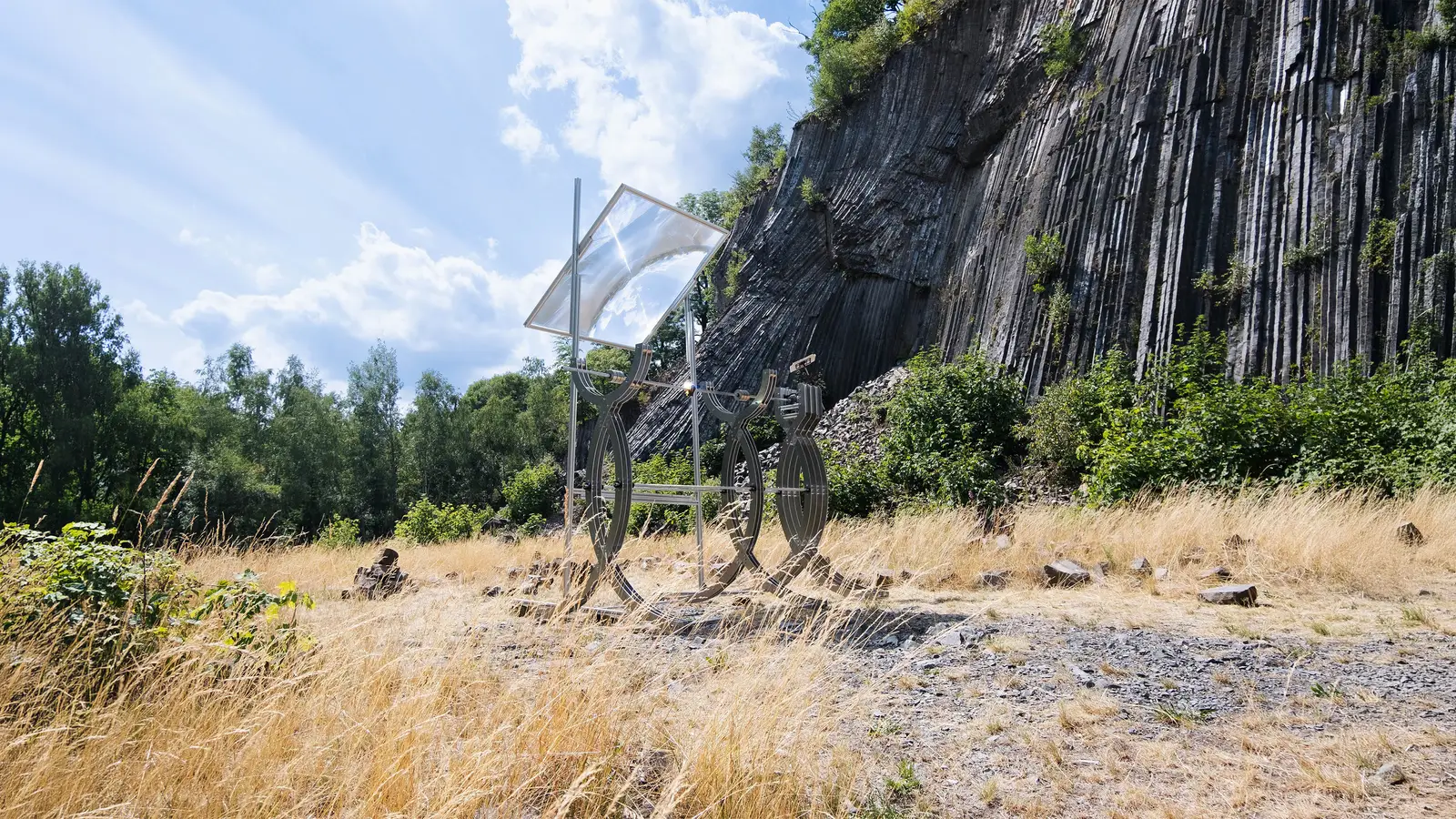
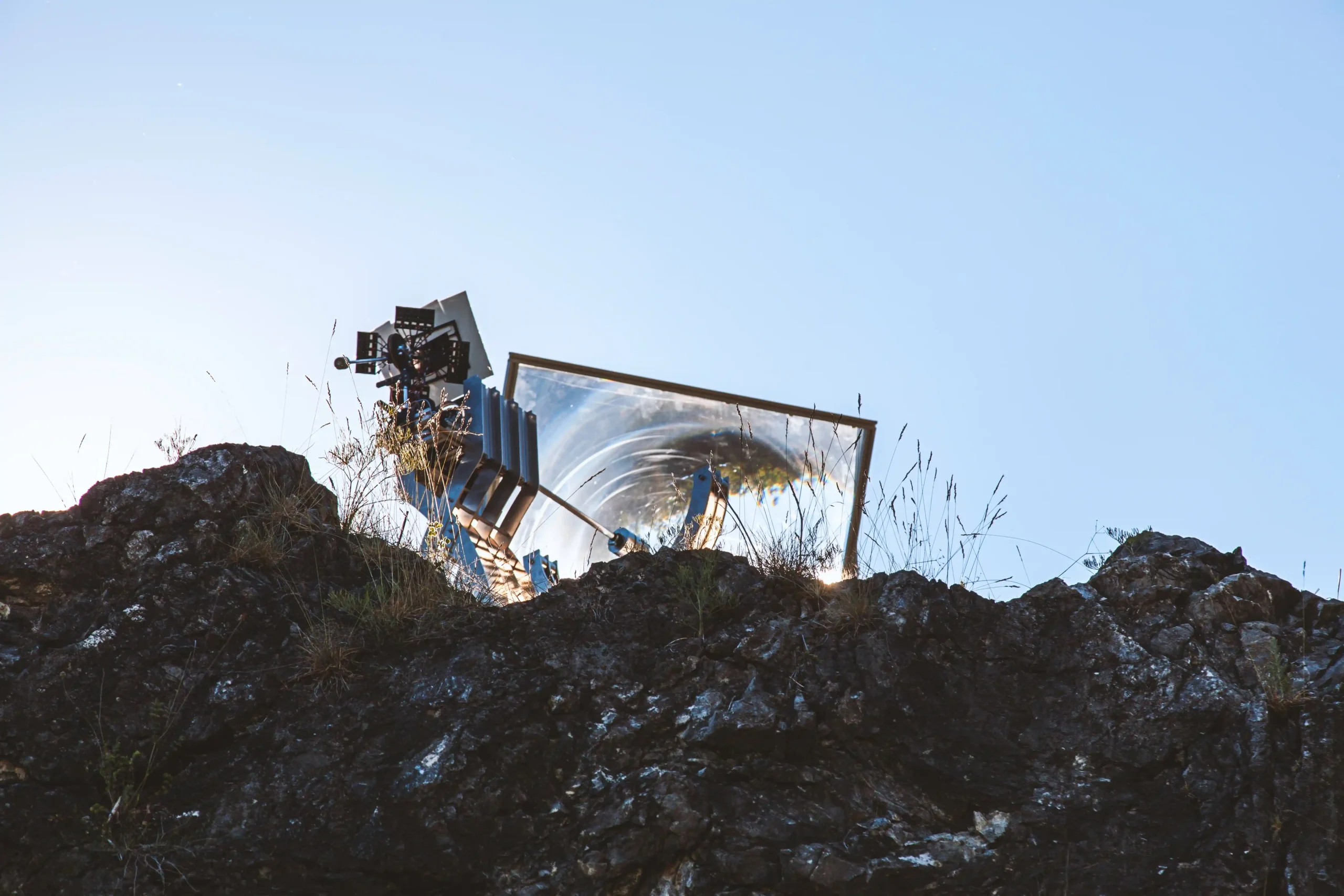
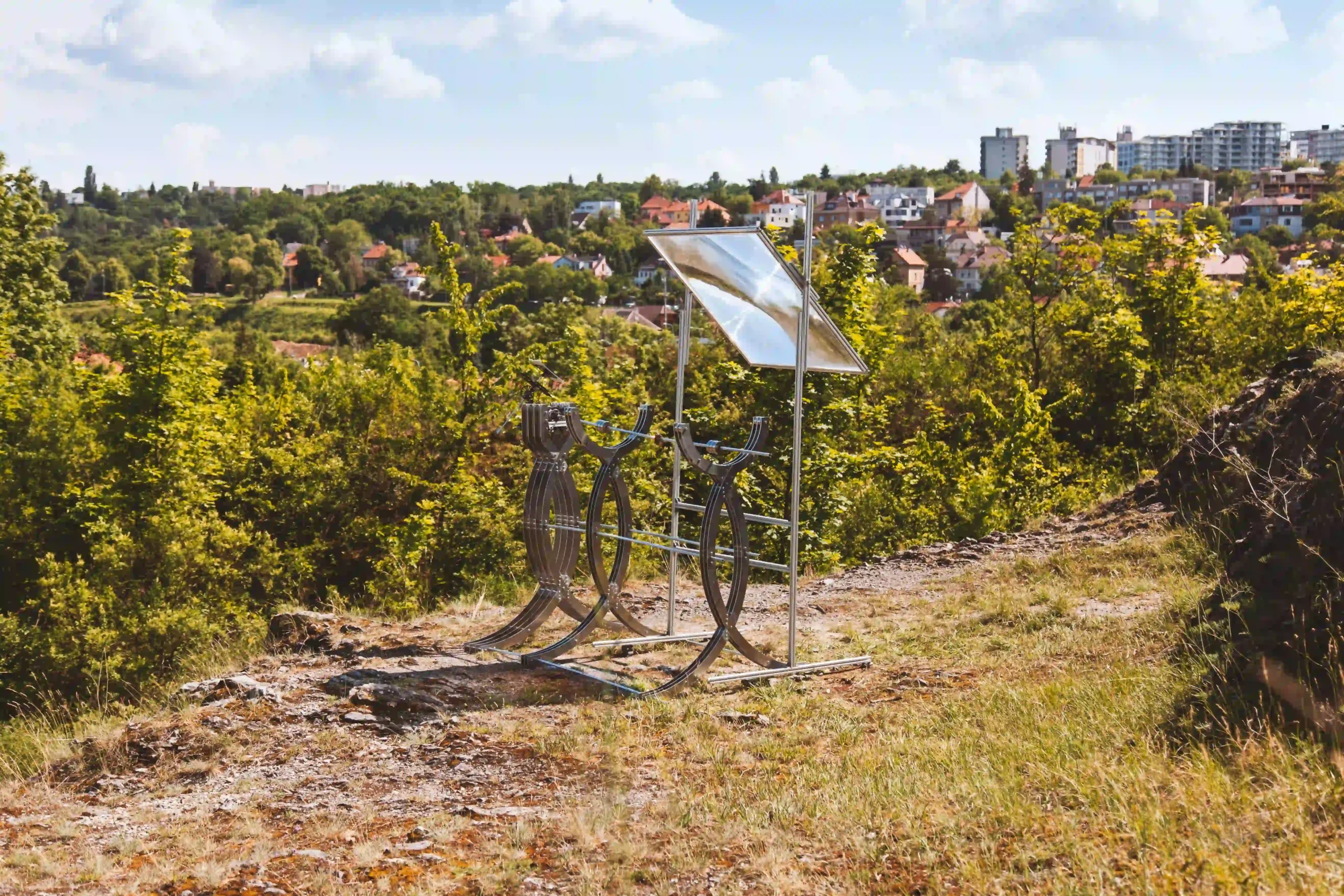
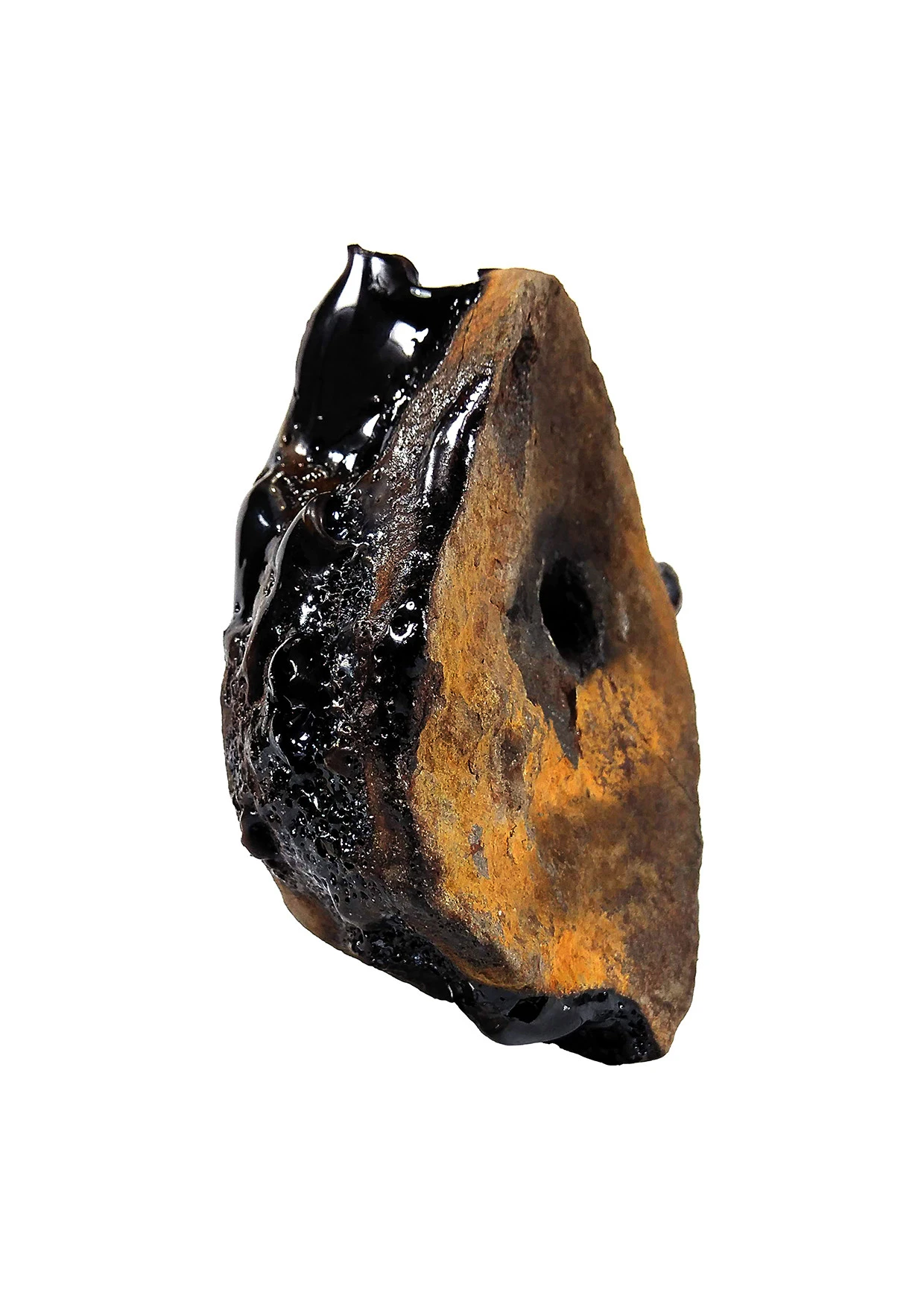
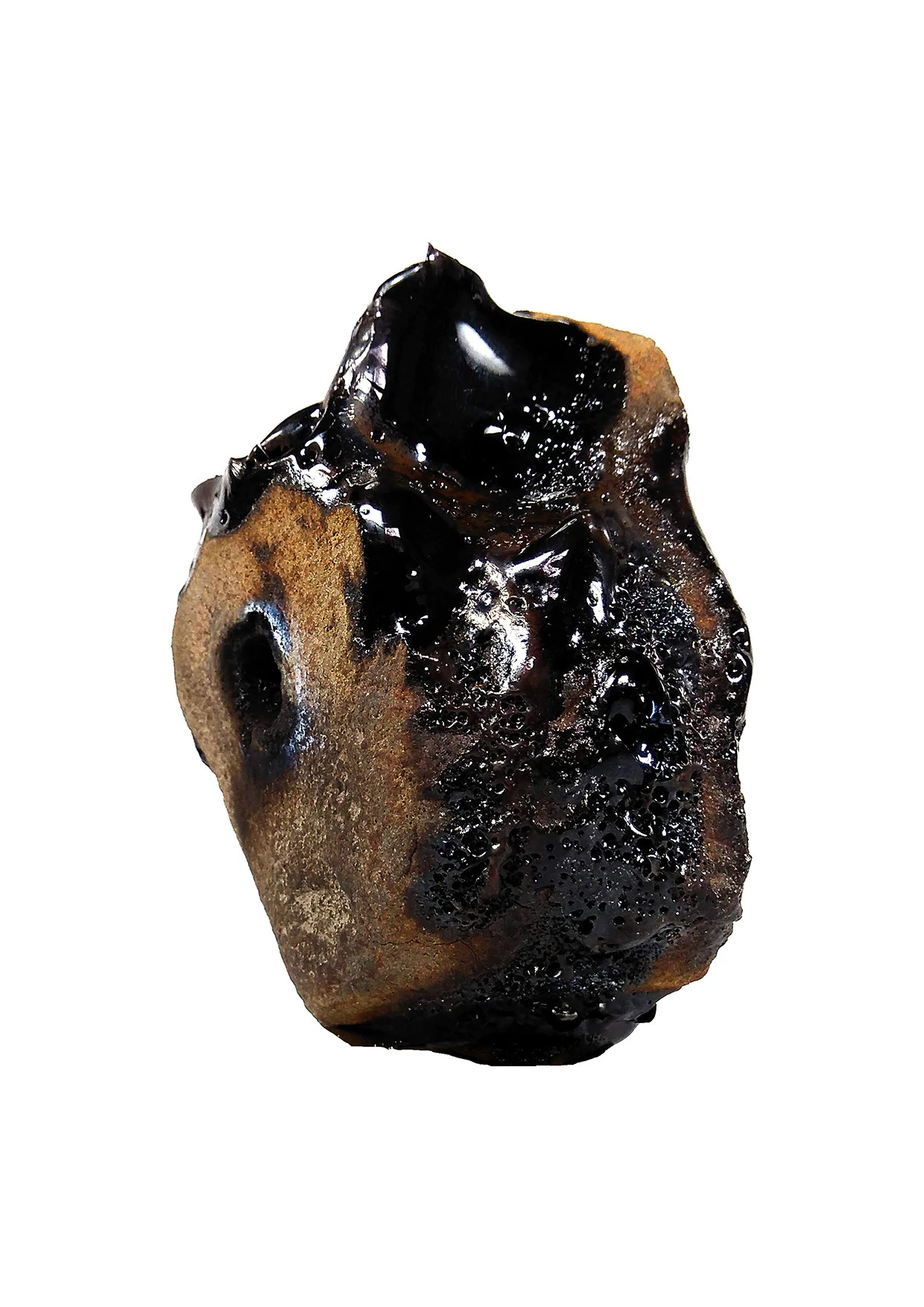
Hybrid installation: combined aluminum profiles, 6× translucent LCD display, generative video. Fleet of Raspberry Pi 4B. Custom-made translucent displays. Result is a continuous projection of water micro-world.
CycloneSynth Engine v1.0 — Custom patch in TouchDesigner. Iterative feedback loop (TOPs), each frame as input texture for the next.
Hardware
Fleet of Raspberry Pi 4B. Custom-made translucent displays.
Data source
Time series data from ESA Copernicus (Sentinel-2). Analysis of glacier surface changes — Helheim Glacier (Greenland), western Greenland glaciers, Grey Glacier (Chile), Malaspina Glacier (Alaska), Bear Glacier (USA).
Interaction
Passive, contemplative. The viewer witnesses an irreversible, algorithmically driven process of visual dissolution.
Location of origin
Pragovka Gallery, Prague (group exhibition „Alternative Models of the Future“)
Type of exhibition
Gallery installation
Curator
Monika Szucsova
Photo
Author archive
Author of text
Kryštof Brůha
Key concepts
Technological sublime, aesthetics of demise, data metabolism, environmental melancholy, spectral presence, pigment map
Text title
Magna Mutatio / Gelu: Chronicle of Ephemerality in Algorithmic Layers
Date
Exhibition
7.5.2022
Alternative Models of the Future – Pragovka Gallery, Prague
Series
Related works
Magna Mutatio
Magna Mutatio – Lake MacKay (2022) — shares CycloneSynth Engine
Magna Mutatio
Magna Mutatio – Yamaneko (2022) — shares CycloneSynth Engine
CONCEPT
The multispectral imaging from the Sentinel-2 (ESA) satellite maps changes in the glacier structures of five locations: Helheim Glacier (Greenland), the glaciers of western Greenland, Grey Glacier (Chile), Malaspina Glacier (Alaska), and Bear Glacier (USA). The fluid processing of these data streams from the Copernicus programme transforms electromagnetic signals into dynamic visual sequences. As Livia Jakob notes in her study on the spatio-temporal analysis of ice loss, this approach makes it possible to „peer into the anatomy of inaccessible ice bodies.“ Here, data is born like seismic tremors, pulsating in digital space only to dissolve in an endless cycle of updates.
The generative visualization of glacier transformation—specifically Helheim Glacier (Greenland), the glaciers of western Greenland, Grey Glacier (Chile), Malaspina Glacier (Alaska), and Bear Glacier (USA)—is realized through pigment maps that gradually bleed over time. This process evokes a data metabolism in which each pixel represents an ice molecule exposed to entropy. Translucent displays function as hybrid membranes, connecting the ephemeral archiving of satellite records with the physical fragility of the gallery space. Echoing the philosophical theme of panta rhei („everything flows“) espoused by Heraclitus, „no data is an island—it always returns to the river of time.“
The monumental algorithmic traces of the glaciers vanish in real time. Multispectral reflections and organic pigments form an unstable network of meaning, in which technology reveals its own transience. Swath altimetry stands as a memento: even scientific objectivity has its own half-life. Data are glacial rivers—seemingly eternal, yet destined to escape into the digital ocean.
Magna Mutatio / Gelu reflects the concept of the technological sublime—an aesthetic that links the terror of natural demise with awe of scientific precision. Just as Edmund Burke’s Romantic conception of the sublime hinges on the tension between human fragility and the monumentality of nature, the ESA datasets reveal a paradox: the more meticulously we map ice loss, the more clearly we perceive the limits of our own agency. The project becomes a metaphor for the scientific endeavor: to capture transience using tools that are themselves subject to decay. As the bleeding pigment layers suggest, every act of archiving is merely a gradual farewell. It is as if we see our own reflection through the displays—beings longing for a trace that will survive the very moment of its creation.