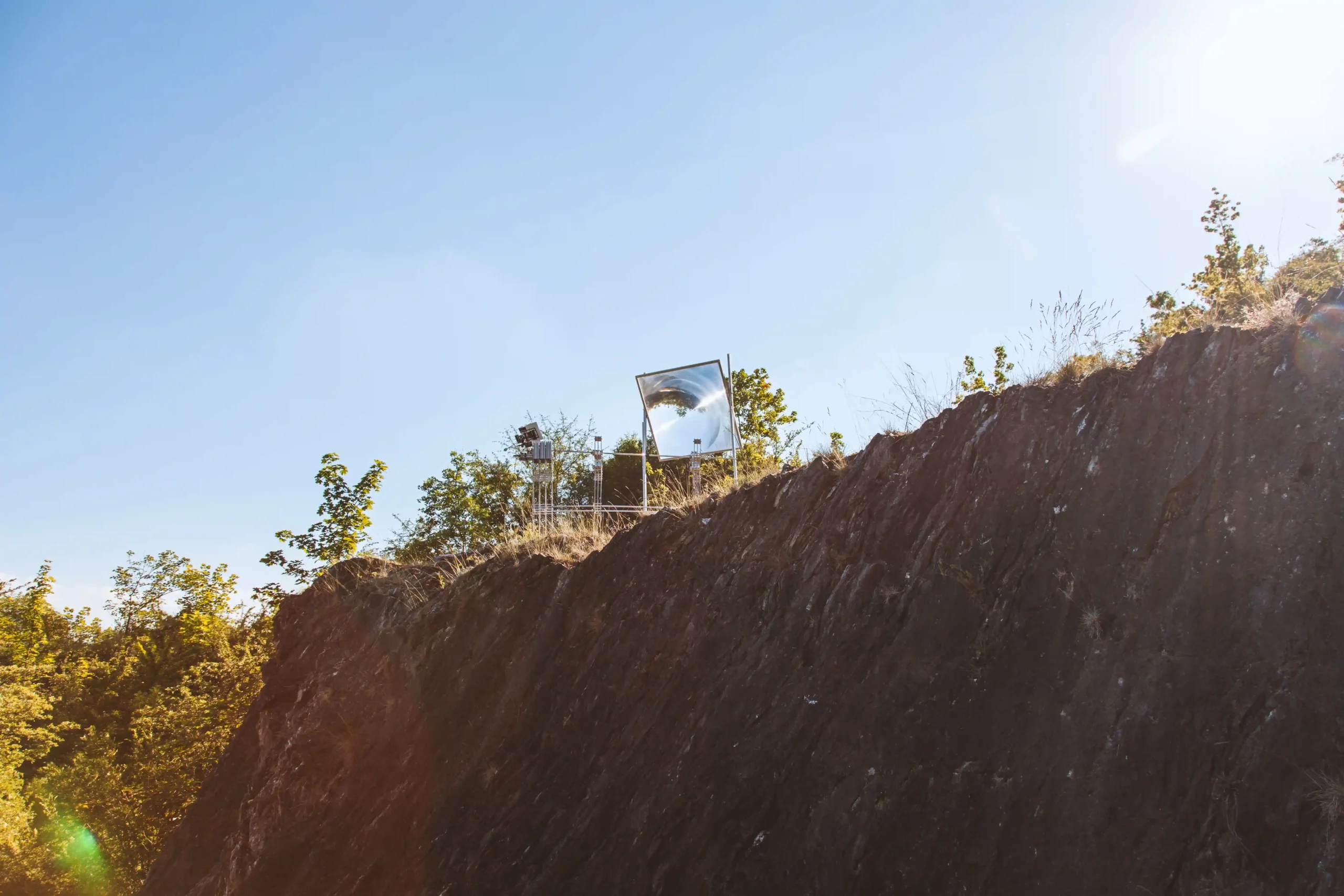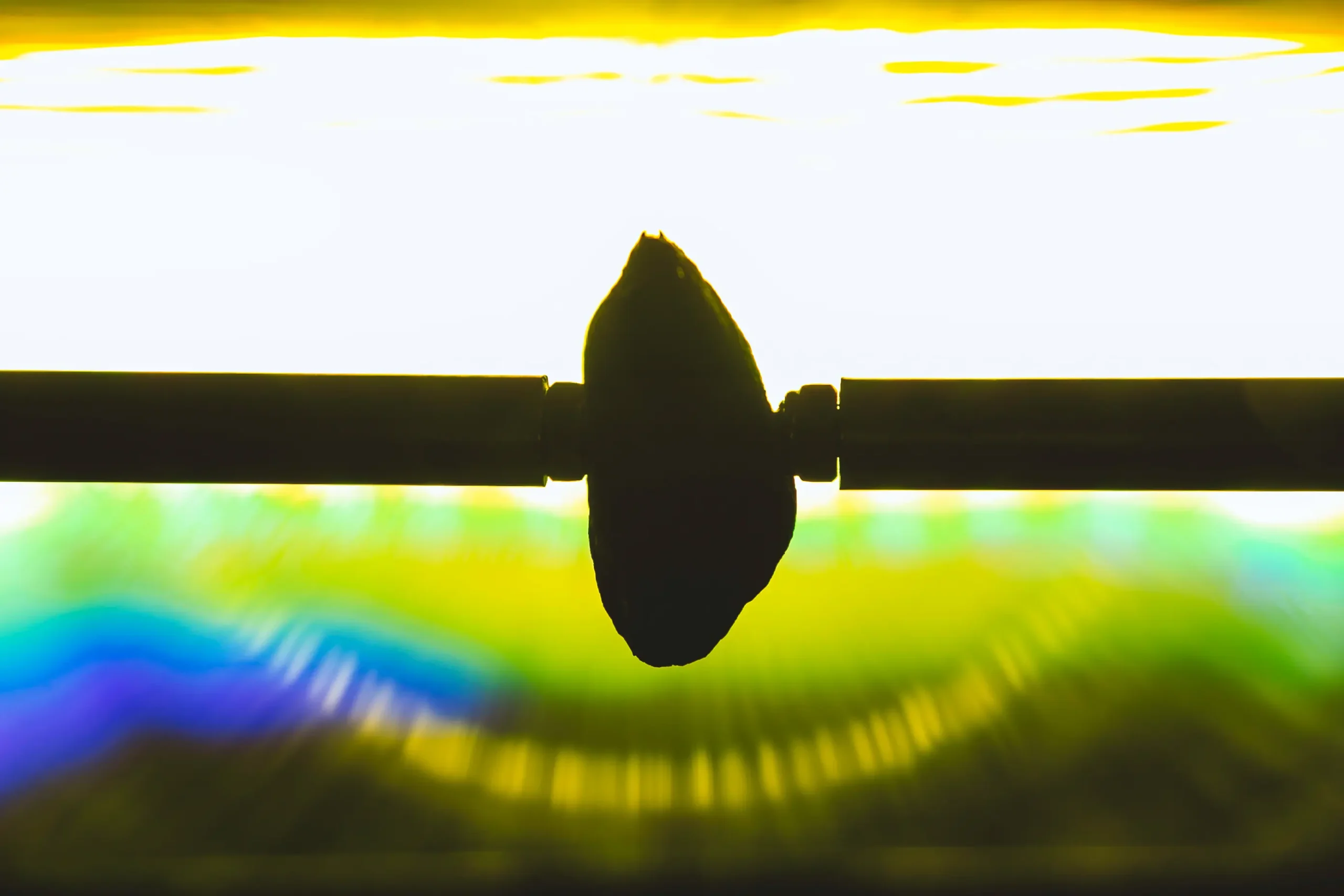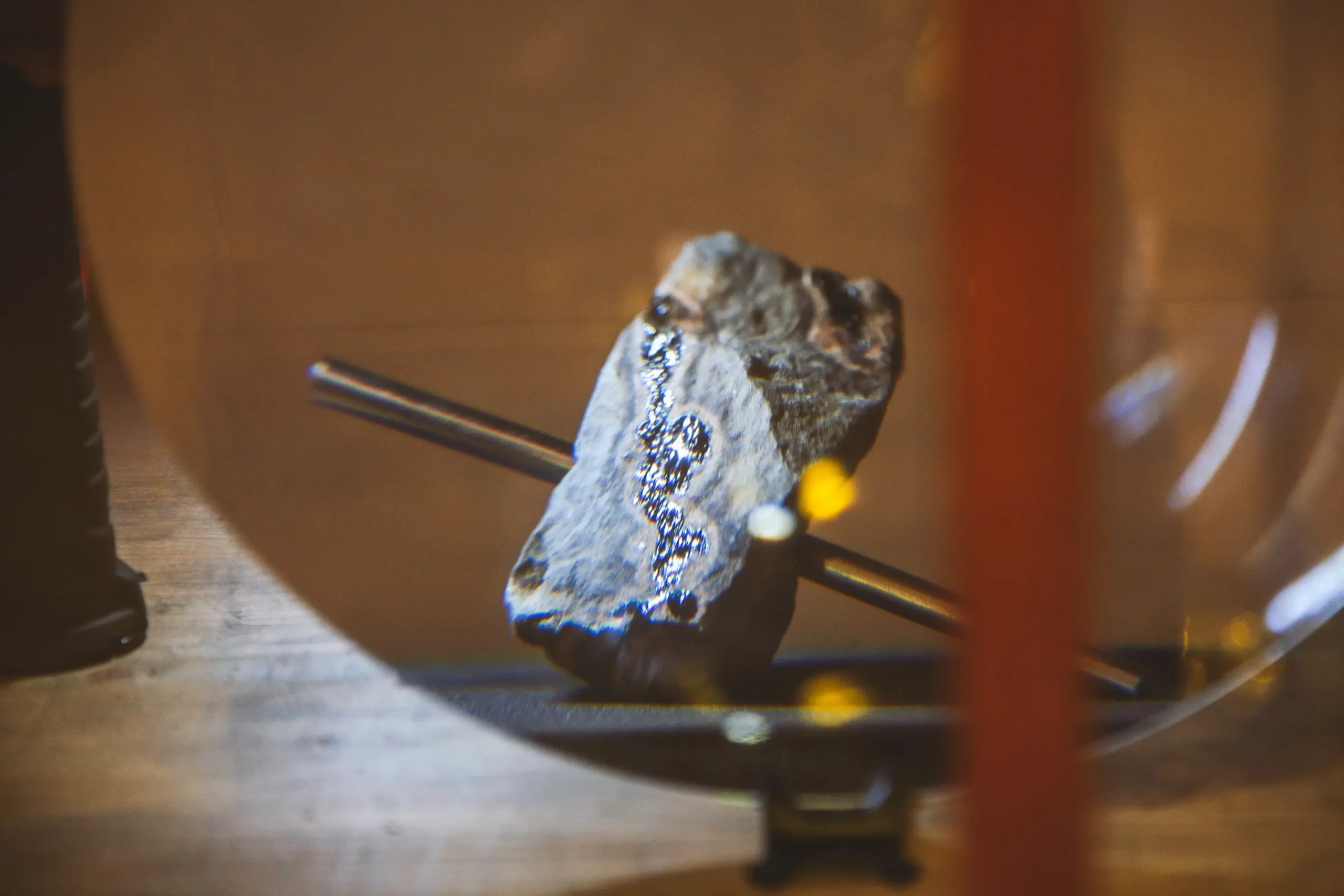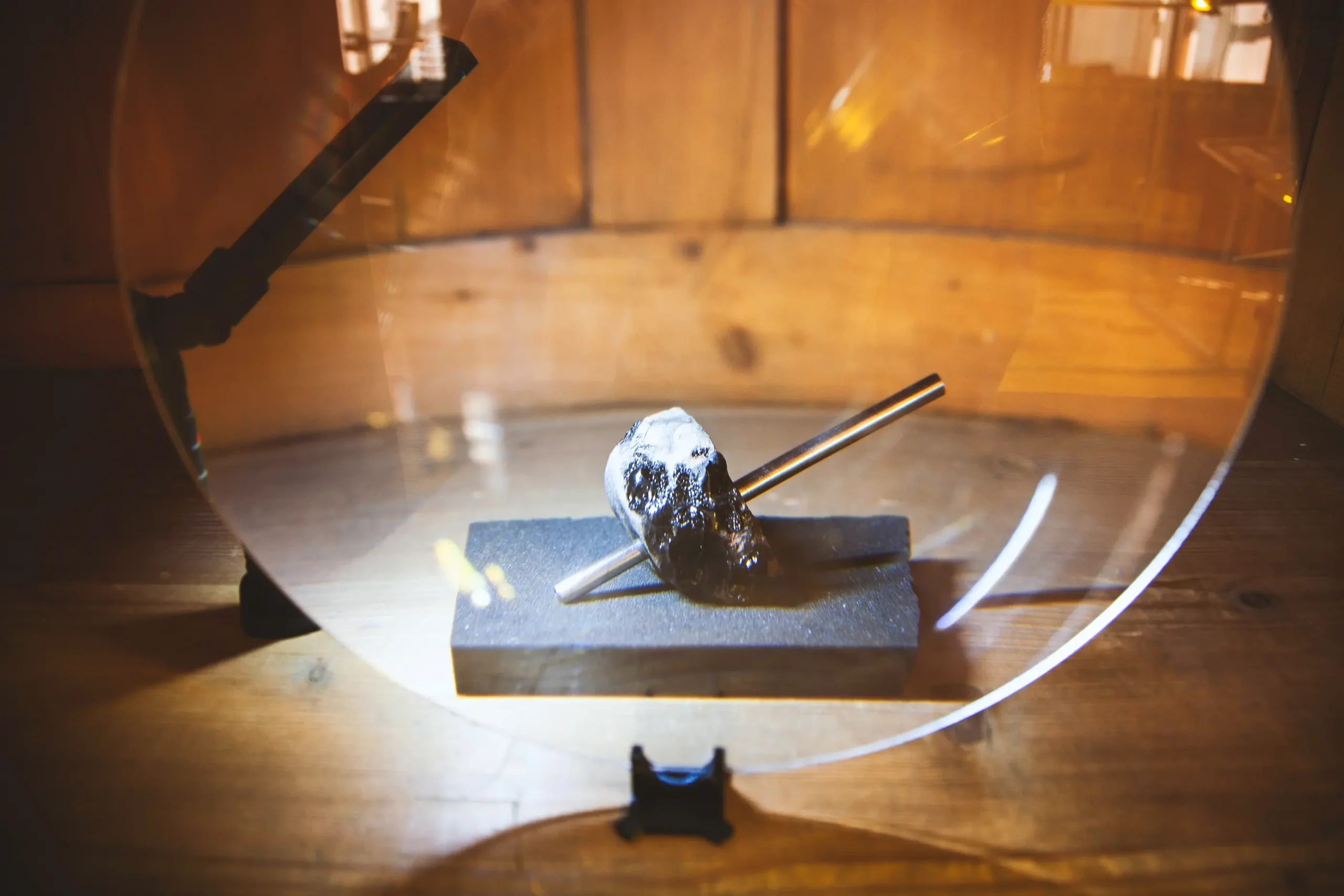
Generative video, 4K, single-channel. Tokenized on Ethereum platform (ERC-721). High-performance workstation (NVIDIA RTX series) Result is a continuous projection of water micro-world.
| Series | Magna Mutatio |
| ID | 2022-MM-YAM-01 |
| Date of origin | 8.12.2022 |
| Technique | Generative video, 4K, single-channel. Tokenized on Ethereum platform (ERC-721). |
| Dimensions | Digital file, 16:9 |
| Duration | 00:06:02 |
| Software | CycloneSynth Engine v1.0 – Custom patch in TouchDesigner. Iterative feedback loop (TOPs), where each frame is used as input texture for the next, modulated by time series of satellite data. GLSL shaders for fluid dynamics and chromatic dispersion. |
| Hardware | High-performance workstation (NVIDIA RTX series) |
| Data source | Aggregated data from meteorological satellites (JMA – Himawari-8, NOAA – GOES-18). Multispectral images and infrared layers of Cyclone Yamaneko in the time period 10-14 November 2022. |
| Interaction | None direct. System interacts with itself (feedback loop) and with archival data. |
| Location of origin | Arthouse Hejtmánek, Prague; OpenSea NFT marketplace |
| Type of exhibition | Gallery installation |
| Curator | Tomáš Hejtmánek |
| Photo | Author archive |
| Author of text | Kryštof Brůha |
| Key concepts | Fluid data processing, ephemeral archive, chrono-synthesis, data metabolism, digital entropy, hyperobject |
| Text title | Magna Mutatio / Yamaneko: Algorithmic Trace of an Ephemeral Phenomenon |
| Date | Exhibition |
| 8.12.2022 | Magna Mutatio / Yamaneko – Arthouse Hejtmánek, Prague |
| Series | Related works |
| Magna Mutatio | Magna Mutatio – Gelu (2022) — shares CycloneSynth Engine |
| Magna Mutatio | Magna Mutatio – Lake MacKay (2022) — shares CycloneSynth Engine |
CONCEPT
As a sensory transducer of atmospheric processes, Yamaneko reconstructs the genesis of a tropical cyclone (10–14 November 2022, 276 NM north of Wake Atoll) through fluid data processing. The spatiotemporal framework (13:00–19:00 UTC+1) functions as a dynamic matrix in which the meteorological phenomenon oscillates between concrete satellite traces and the elusive essence of a fleeting occurrence.
At the core of the technical solution is a sui generis feedback-based algorithm that synthesizes datasets from synchronized satellite imagery into a visual continuum. Each image element is the result of an iterative transformation: the original imagery is modulated by an algorithm that combines temporal layers, geometric distortions, and chromatic shifts. This process—termed „chrono-synthesis“—translates fragmented data into a moving composition whose structure mirrors the storm from its formation to its dissipation.
The material composition becomes a metaphor for transience: satellite pixels are reduced to fluid data layers, while the „medium“ of the work consists of ephemeral archiving—an unstable network of visual relations that vanishes along with the cyclone’s energy. Unlike traditional media (such as photography or video), Yamaneko is constituted by a fluid translation between raw data and its algorithmic interpretation, wherein each iteration of the feedback loop generates new interference patterns.
Interaction with the work is not passive observation, but rather an implicit participation in a network of techno-natural relations; the viewer observes a visualization where each phase arises from the collision between static satellite images and dynamic algorithmic rules. This principle—akin to Kryštof Brůha’s methods—blurs the boundary between document (the satellite image) and performance (the algorithmic transformation), thereby challenging the role of the human as observer within a technologically constructed environment.
Human categories—such as the name Yamaneko or time intervals—are temporary, whereas the cyclone itself exists as a multidimensional process that transcends the human scale. Its “demise” is not a final act, but rather a phase of energy transformation back into the data metabolism. The paradox: an attempt to capture the transient using equally transient tools—algorithms and cloud archives.
In the broader context of digital culture, the work critiques the illusion of permanence: just as the storm vanishes from radar screens, our algorithmic models (forecasts, simulations) are mere fragments within a liquid archaeology of data. Yamaneko thus does not merely track a meteorological phenomenon, but also the fragility of technological representation—its inability to capture the dynamics of events that are born, exist, and perish beyond the human horizon. The work’s visuality, characterized by interference lines and morphing structures, becomes a metaphor for this cycle: data is born from chaos, exists as a fleeting pattern, and vanishes into digital entropic noise.
GALLERY